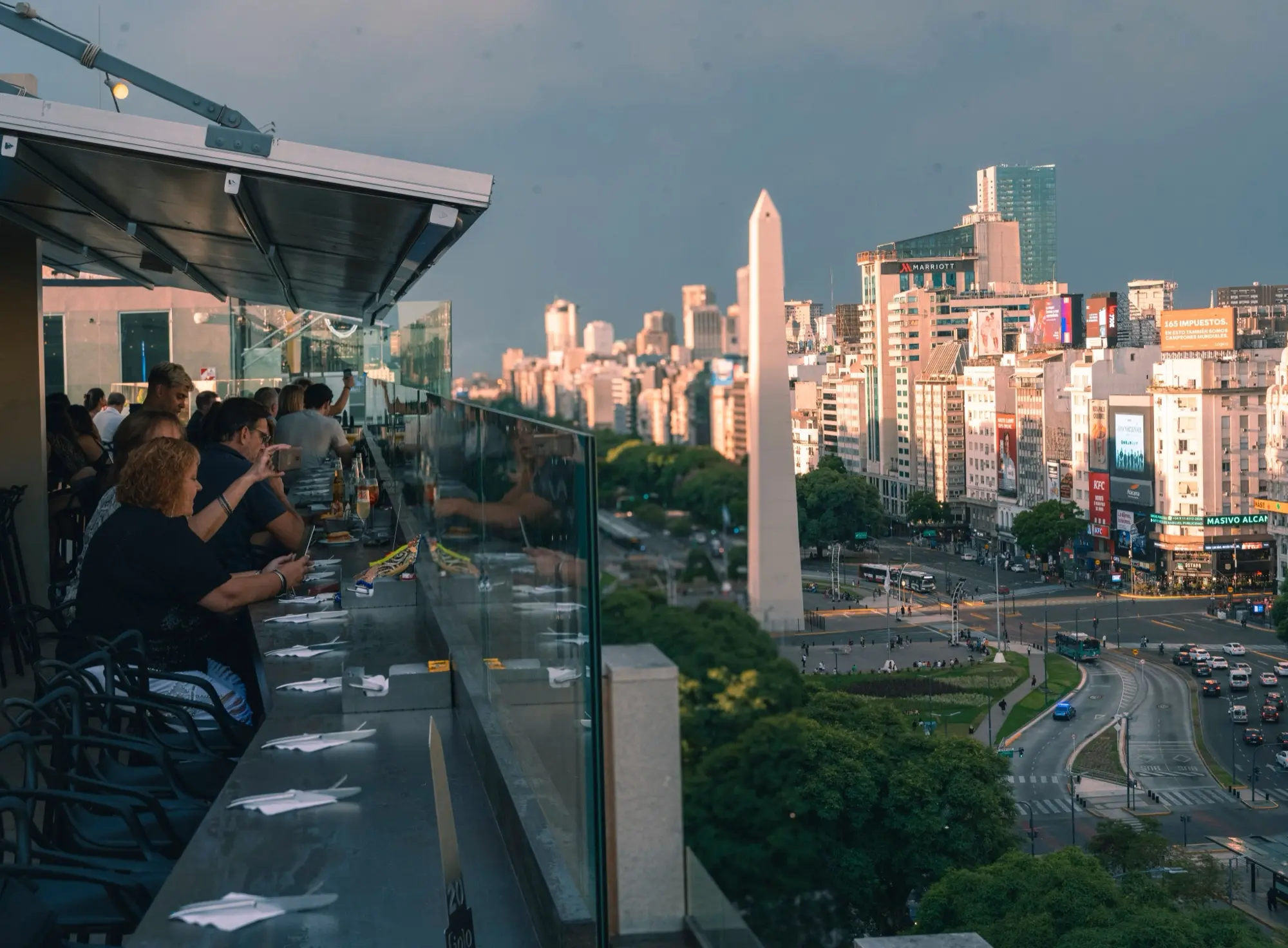
Buenos Aires
January is hot and half-shut as porteños flee — spring and autumn are the real seasons.
When to visit Buenos Aires
Buenos Aires is calmest in June and busiest in November. For the best balance of decent weather and smaller crowds, aim for January.
Buenos Aires is a southern-hemisphere city with a European rhythm, and that produces an unusual crowd pattern. January is peak summer — 30°C and sticky — and it is also when the city empties: porteños decamp to the Atlantic coast, restaurants and theatres close for the month, and the streets are quieter than at any other point in the year. You get an open city with half its cultural life switched off.
The two genuine sweet spots are spring and autumn. October and November bring mild days, jacarandas turning whole avenues purple, and the full theatre and football calendar in motion. March and April do the same in reverse, with warm afternoons and cool evenings. These are the busiest months for visitors, and they are busy for good reason.
Winter is cold rather than harsh — mid-teens by day, rarely near freezing — and it suits exactly what this city does well: long dinners, milongas, bookshops and steak. July brings the Argentine school break and a domestic bump, but June and August are among the quietest and cheapest weeks of the year with everything fully open.
Book things to do
Tours and tickets in Buenos Aires, from our booking partner.

Crowds month by month
Twelve months of Buenos Aires at a glance — tap a month for the full picture.
Every month in Buenos Aires
Weather, crowds and what’s on — one page per month.
Weather through the year
Typical highs, lows and wet days.
Best day of the week
How the crowd moves through a typical week.
Tue is normally the calmest day of the week.
Best time of day
The daily rhythm, hour by hour.
The 9:00 AM window is usually the calmest of the day.
Where the crowd gathers
A typical peak afternoon in the centre.
How long to stay
Four days for the city and its neighbourhoods; five or six if you want Colonia in Uruguay or an estancia day in the pampas.
Local timing tips
- Dinner starts late — most restaurants do not fill until after nine and many do not open before eight, so booking for seven gets you an empty room.
- Carry small notes and check the current exchange rate before changing money; paying by foreign card is now straightforward and gets a favourable rate.
- Recoleta Cemetery and the San Telmo Sunday fair are both far calmer before eleven in the morning.
- A tango show and a milonga are different things — the milongas where locals actually dance are cheap, informal, and start close to midnight.
Frequently asked questions
When is the best time to visit Buenos Aires?
The best time to visit Buenos Aires is June, the quietest month of the year, or the shoulder weeks around January when the crowd eases but the weather still holds.
What is the cheapest and quietest month in Buenos Aires?
June is the quietest month in Buenos Aires, with a modelled crowd level near 52/100 and typical highs of 16°C.
When is Buenos Aires most crowded?
Buenos Aires peaks in November, when both visitor numbers and prices are at their highest.
How many days do you need in Buenos Aires?
Four days for the city and its neighbourhoods; five or six if you want Colonia in Uruguay or an estancia day in the pampas.
Other attractions
Photo: Mario Amé · Pexels