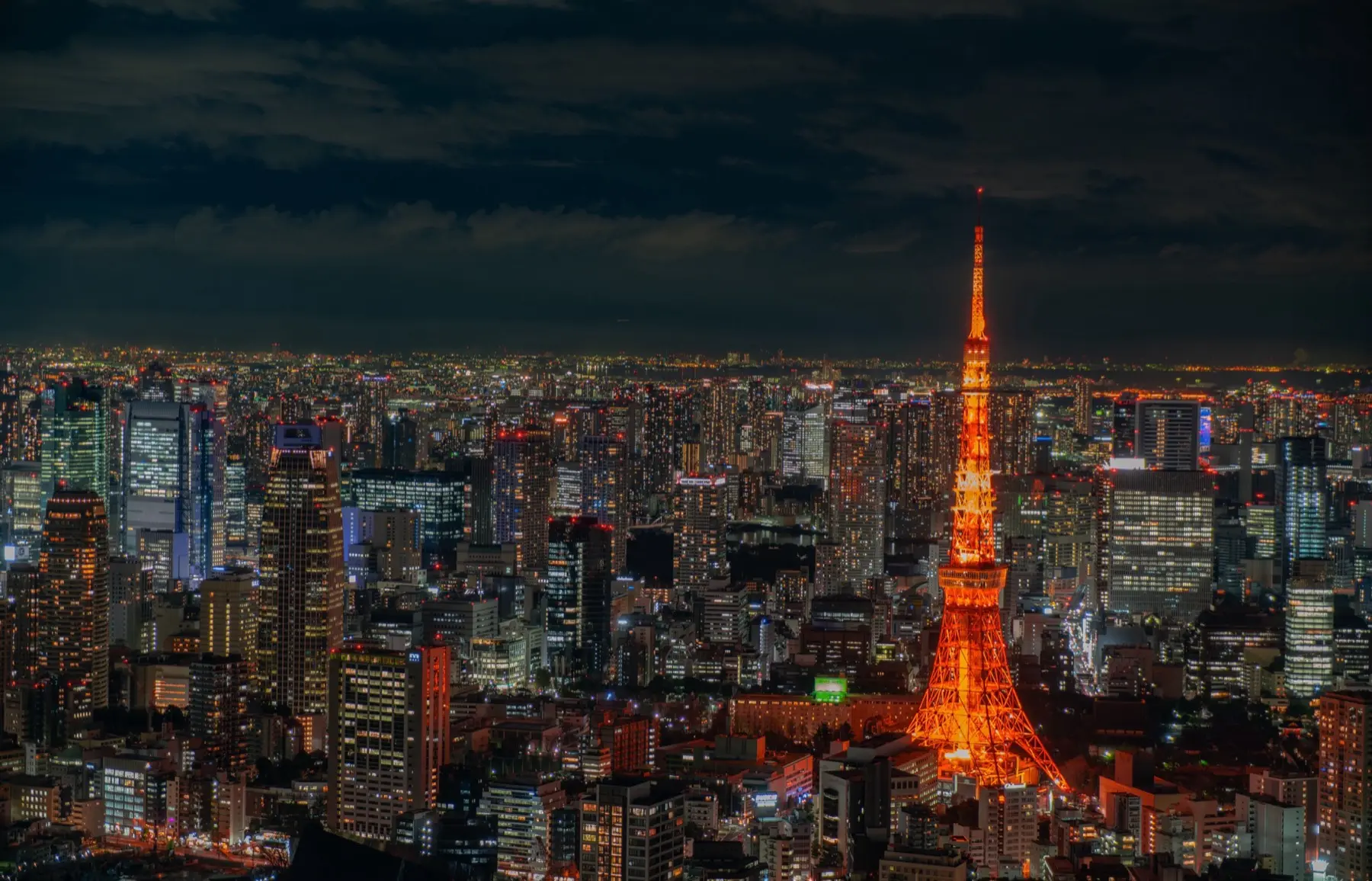
Tokyo
February and June are Tokyo’s bargains — cold or drizzly, but the queues are not there.
When to visit Tokyo
Tokyo is calmest in February and busiest in April. For the best balance of decent weather and smaller crowds, aim for January.
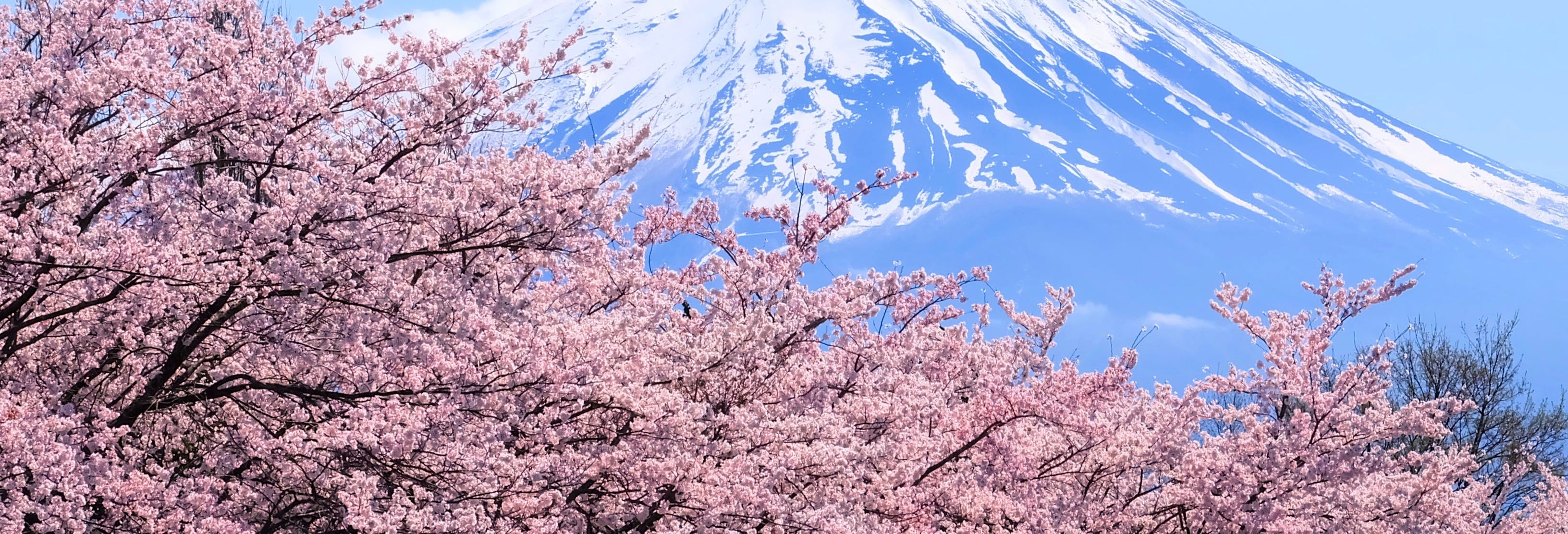
Tokyo does not have a single tourist season so much as four crowd events: New Year in the opening week of January, cherry blossom from late March into early April, Golden Week from April 29 to May 5, and the autumn colour of late November. Each pushes hotel prices up sharply and books out the things that need booking. Between them the city absorbs visitors remarkably well — a metropolis this size has a lot of slack.
The genuinely quiet months are February and June, for opposite reasons. February is cold and dry, with the cheapest long-haul fares of the year and the clearest air; June is the tsuyu rainy season, grey and humid but rarely a washout, and it is the easiest time to walk into a major exhibition. September is the third option — hot, sticky, typhoon-prone and cheap, with the compensation that it ends well.
If you want postcard weather without postcard queues, aim for the second half of May or the first half of October. Both give you dry, mild days, and both sit in the gap between the domestic travel peaks that actually drive the crowd here.
Book things to do
Tours and tickets in Tokyo, from our booking partner.
Crowds month by month
Twelve months of Tokyo at a glance — tap a month for the full picture.
Every month in Tokyo
Weather, crowds and what’s on — one page per month.
Weather through the year
Typical highs, lows and wet days.
Best day of the week
How the crowd moves through a typical week.
Tue is normally the calmest day of the week.
Best time of day
The daily rhythm, hour by hour.
The 9:00 AM window is usually the calmest of the day.
Where the crowd gathers
A typical peak afternoon in the centre.
How long to stay
Four or five full days for the city itself, six or seven if you want Nikkō, Kamakura or Hakone at a civilised pace.
Local timing tips
- Buy a Suica or PASMO card on arrival — it works on every train, bus and convenience-store till, and saves you doing fare-chart arithmetic at ticket machines.
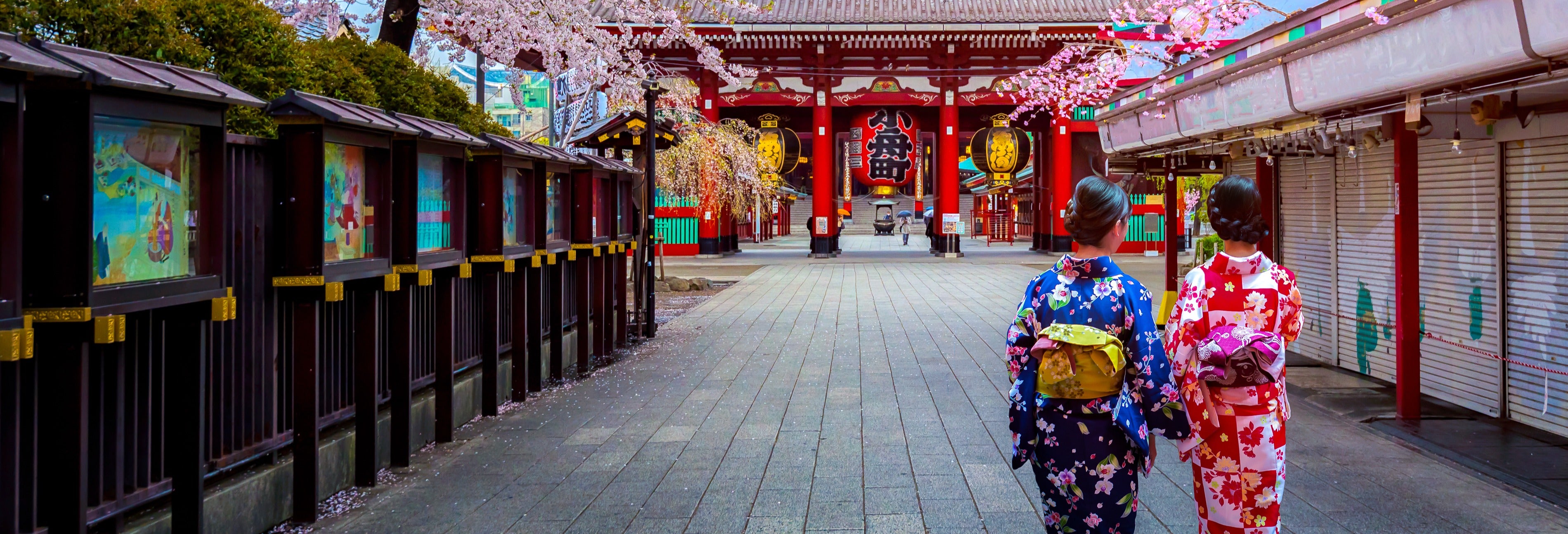
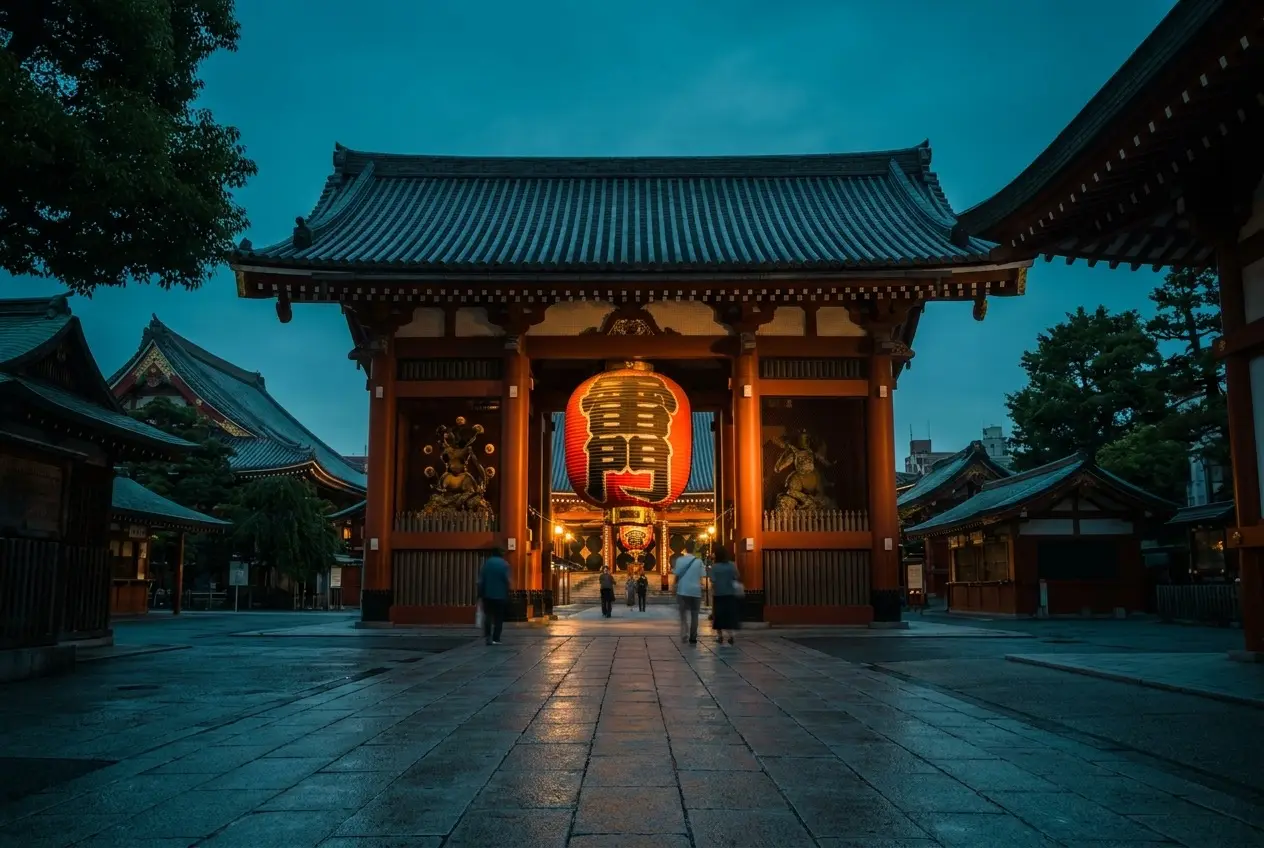
- The headline sights load up after 10am. Sensō-ji at 7am and the Meiji Jingū approach at opening are different places entirely.
- teamLab, the Ghibli Museum and the Shibuya Sky deck sell timed tickets well in advance; almost nothing else in Tokyo genuinely needs forward booking.
- Tokyo is a set of villages rather than a centre. Base yourself on the Yamanote loop and you will rarely spend more than 25 minutes getting anywhere.
Attractions in Tokyo
Frequently asked questions
When is the best time to visit Tokyo?
The best time to visit Tokyo is February, the quietest month of the year, or the shoulder weeks around January when the crowd eases but the weather still holds.
What is the cheapest and quietest month in Tokyo?
February is the quietest month in Tokyo, with a modelled crowd level near 50/100 and typical highs of 11°C.
When is Tokyo most crowded?
Tokyo peaks in April, when both visitor numbers and prices are at their highest.
How many days do you need in Tokyo?
Four or five full days for the city itself, six or seven if you want Nikkō, Kamakura or Hakone at a civilised pace.
Other attractions
Photo: Thomas Lin · Pexels