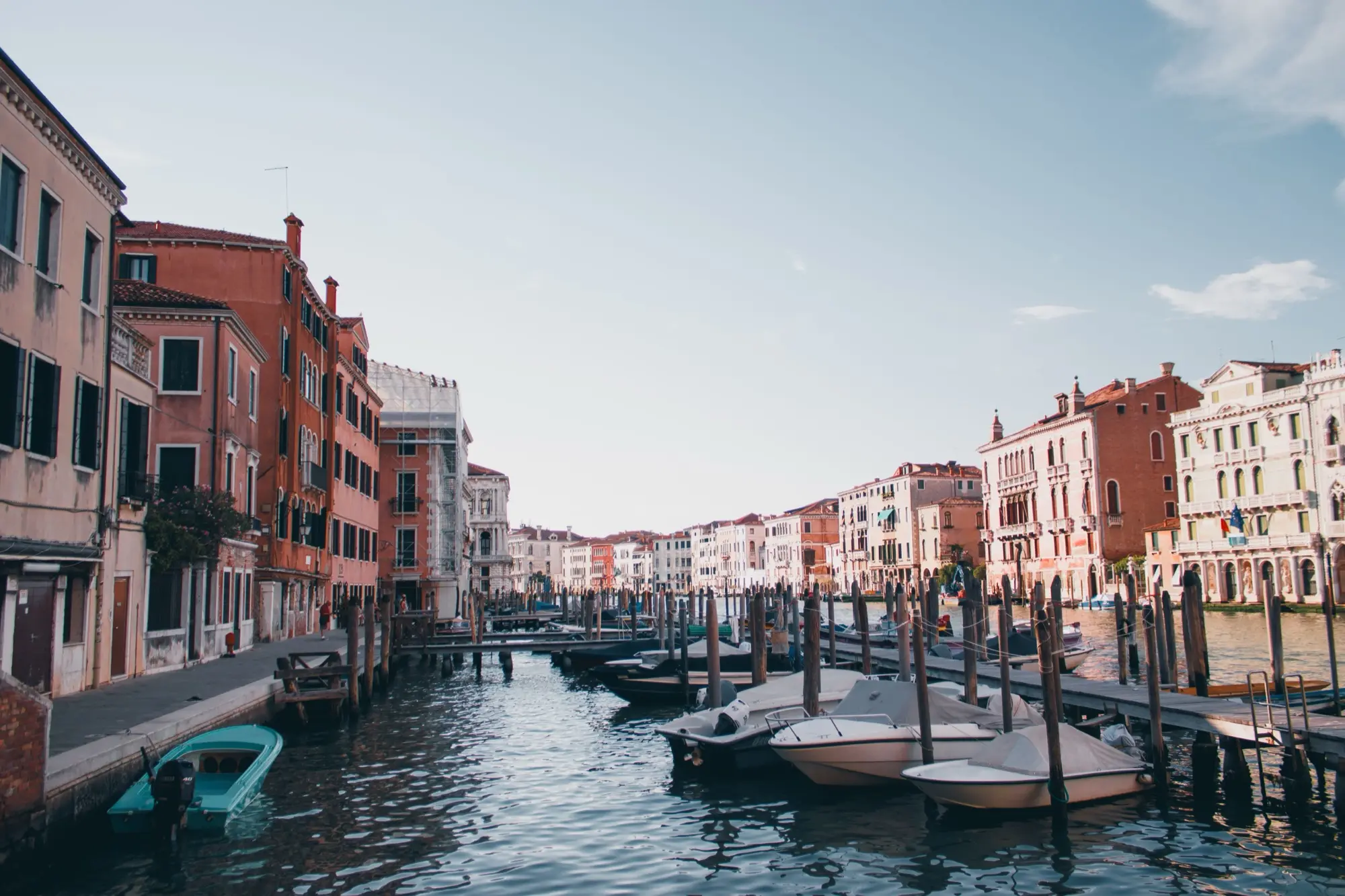
Venice
The city empties every evening — stay overnight and the day-trip wave stops mattering.
When to visit Venice
Venice is calmest in January and busiest in July. For the best balance of decent weather and smaller crowds, aim for November.
Venice is the clearest case in Europe where the time of day beats the time of year. Day-trippers and cruise passengers arrive between nine and eleven and leave by six, and the historic centre holds only about 50,000 residents against several times that in daily arrivals. The same alley that is impassable at noon in July is empty at seven in the morning and again at eight in the evening. Staying at least one night on the islands, rather than in Mestre or on a ship, changes the entire experience.
On the calendar, three things move the needle. Carnival, in the two weeks before Lent — usually February — creates a winter spike that is out of keeping with the rest of the season. The long summer, May to September, is the sustained peak, amplified by coach tours from the mainland and by the Biennale in its exhibition years. And the autumn tail brings acqua alta, the high-water season, which is more inconvenience than emergency but does dictate footwear.
The genuine quiet months are January, late November and early December. It is cold and often foggy, some smaller restaurants close, and the lagoon light is extraordinary. If you would rather have warmth, aim for late October: the coaches have thinned, the water is still calm enough for the outer islands, and the city is recognisably itself again.
Book things to do
Tours and tickets in Venice, from our booking partner.
 Free cancellation
 Free cancellation
 Free cancellation
 Free cancellation
 Free cancellation
 Free cancellation
Crowds month by month
Twelve months of Venice at a glance — tap a month for the full picture.
Every month in Venice
Weather, crowds and what’s on — one page per month.
Weather through the year
Typical highs, lows and wet days.
Best day of the week
How the crowd moves through a typical week.
Tue is normally the calmest day of the week.
Best time of day
The daily rhythm, hour by hour.
The 9:00 AM window is usually the calmest of the day.
Where the crowd gathers
A typical peak afternoon in the centre.
Cruise days change everything
Venice is a cruise port. On ship days the centre fills between mid-morning and late afternoon, then empties again.
How long to stay
Two nights is enough for the main sestieri, but three lets you give Murano, Burano and Torcello a proper day of their own.
Local timing tips
- Sleep on the islands. The day-tripper tide runs out by six, and the streets you queued through at noon are yours by dinner.
- The vaporetto travel pass pays for itself after three rides — buy it at the airport or Piazzale Roma before you need it.
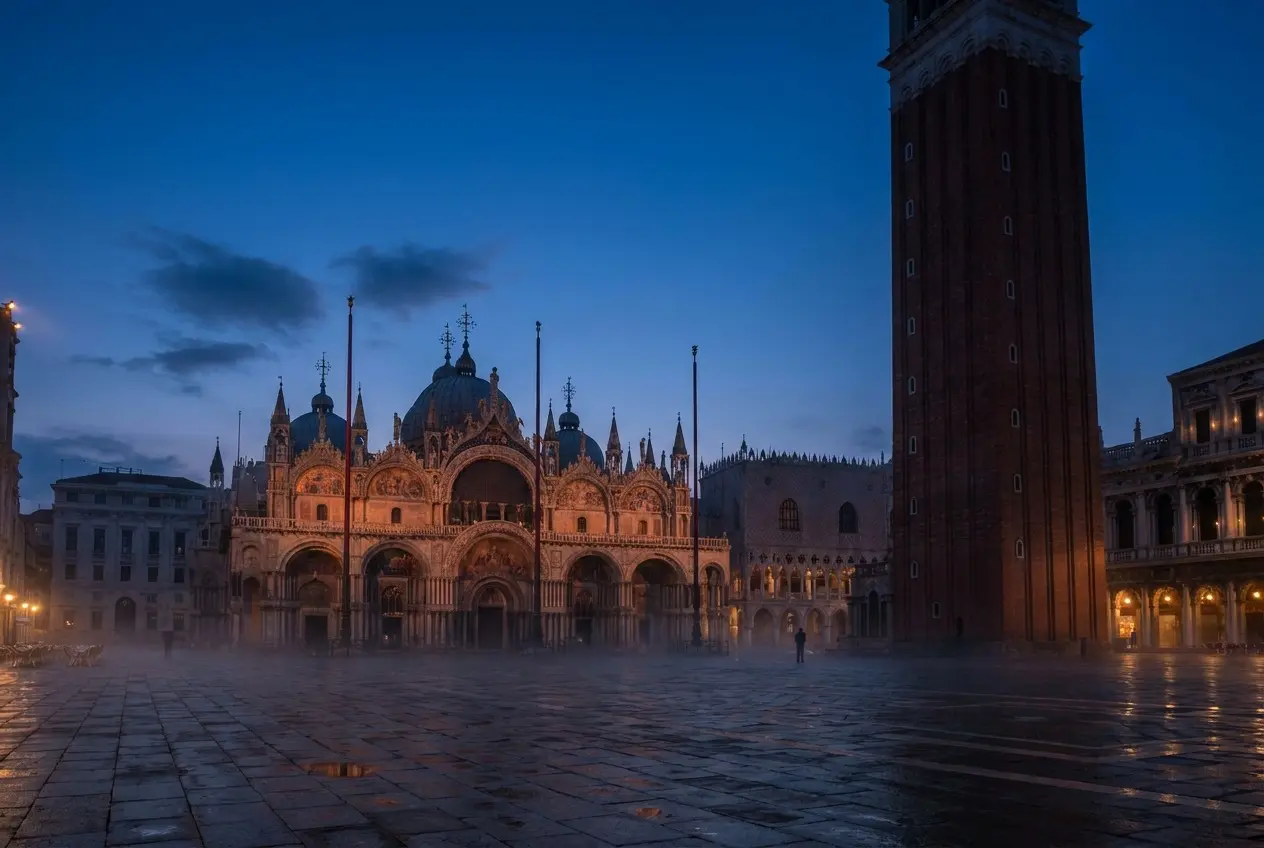
- St Mark’s Basilica takes a small-fee timed booking that skips the main line entirely; it is worth doing even in low season.
- In autumn and winter check the tide forecast on the city’s app — the raised walkways only go up on the main routes.
Attractions in Venice
Frequently asked questions
When is the best time to visit Venice?
The best time to visit Venice is January, the quietest month of the year, or the shoulder weeks around November when the crowd eases but the weather still holds.
What is the cheapest and quietest month in Venice?
January is the quietest month in Venice, with a modelled crowd level near 42/100 and typical highs of 7°C.
When is Venice most crowded?
Venice peaks in July, when both visitor numbers and prices are at their highest.
How many days do you need in Venice?
Two nights is enough for the main sestieri, but three lets you give Murano, Burano and Torcello a proper day of their own.
Other attractions
Photo: Ozan Tabakoğlu · Pexels