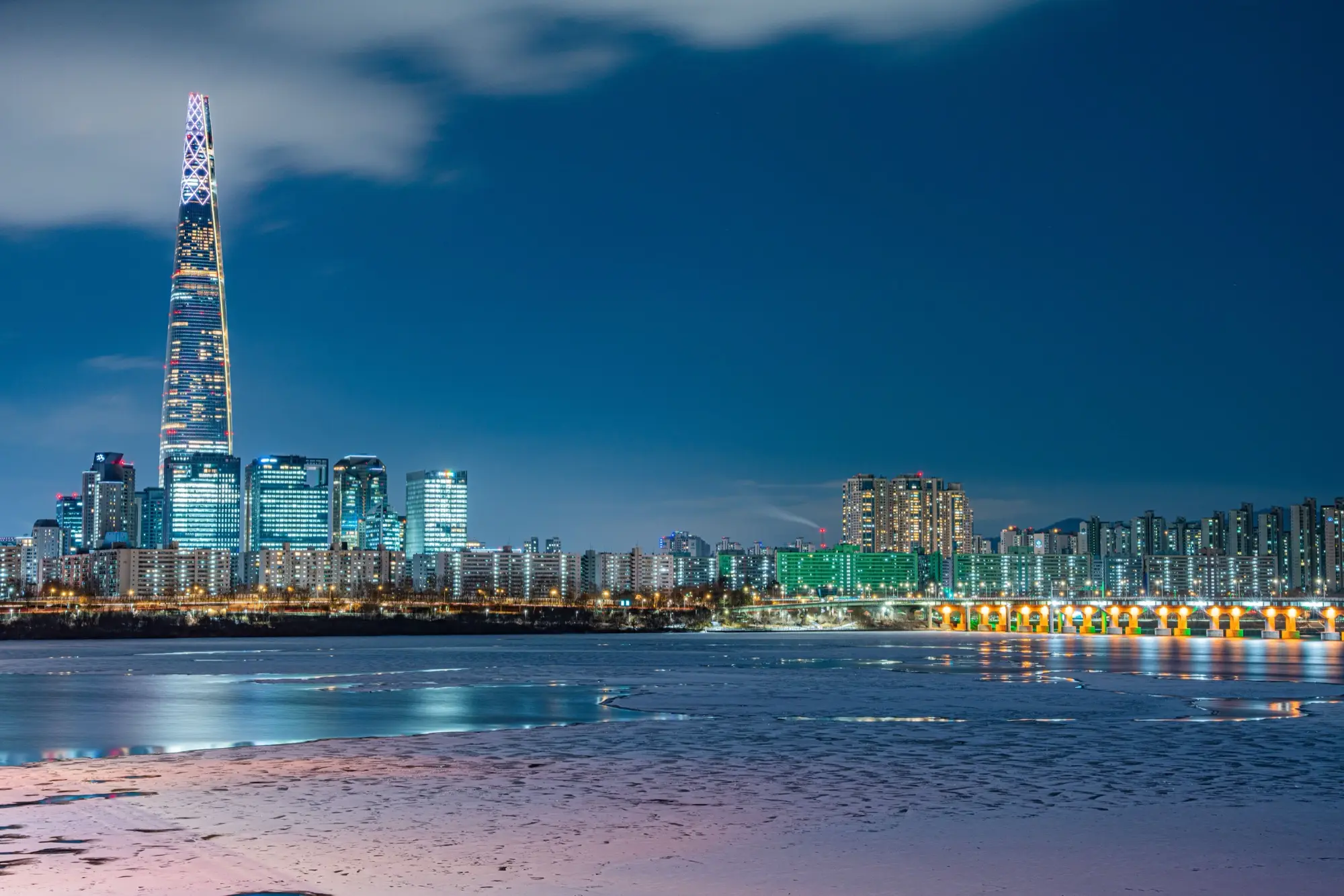
Seoul
October is glorious and packed. Late November buys the same city at half the friction.
When to visit Seoul
Seoul is calmest in January and busiest in October. For the best balance of decent weather and smaller crowds, aim for February.
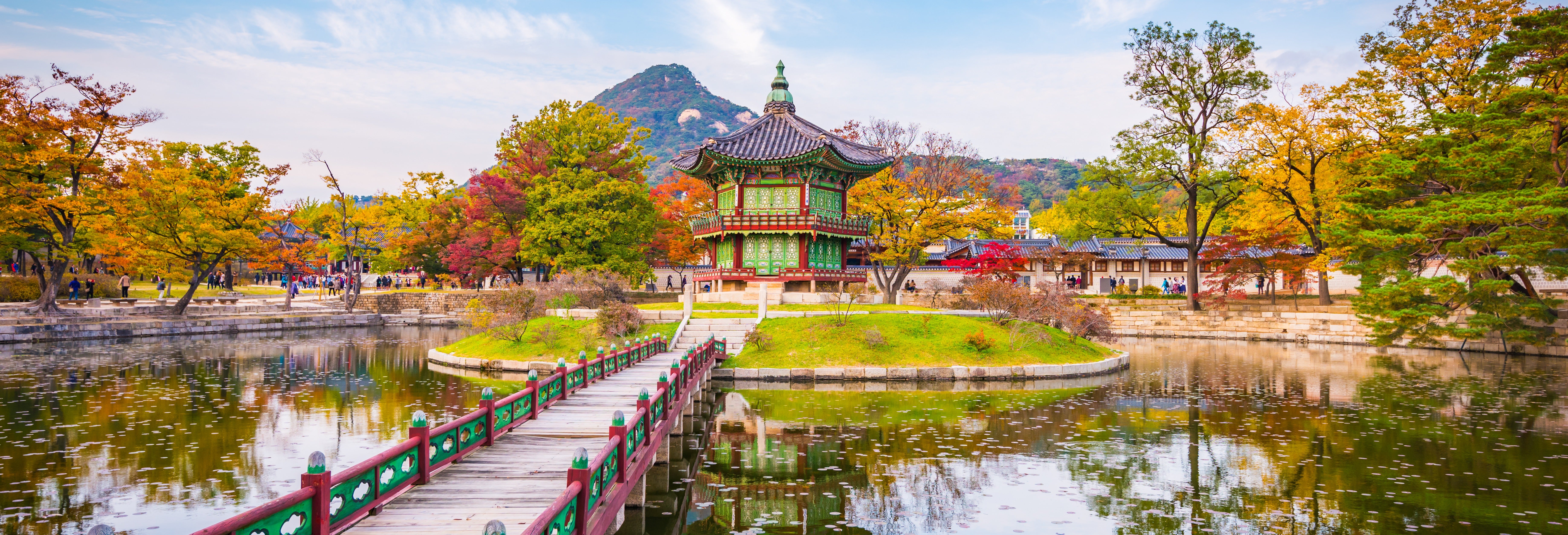
Seoul has four hard seasons and a crowd curve that follows them closely. Spring, from April into May, brings cherry blossom and the best all-round conditions of the year. Autumn, and October in particular, is drier, clearer and mild, and it is the single busiest month for foreign visitors.
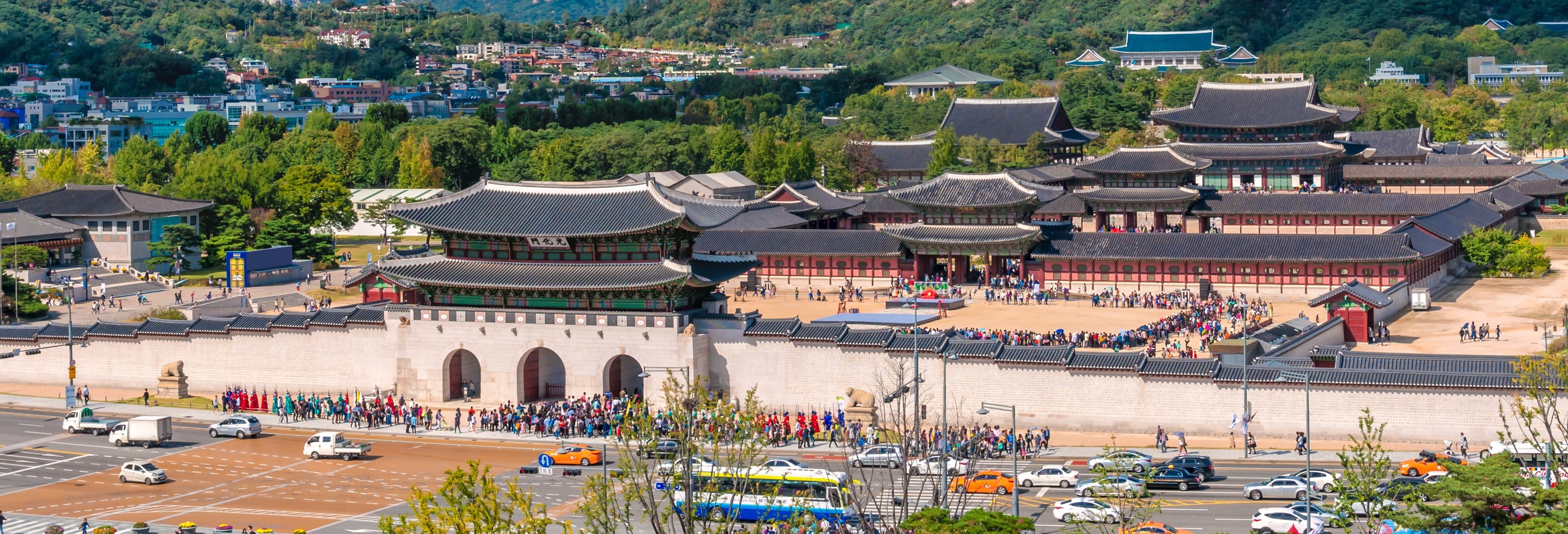
Summer is the trade-off. July brings the jangma monsoon and sixteen wet days; August is hotter and stickier still, though the rain eases and the city thins as residents head for the coast. Winter is dry, sunny and genuinely cold — January highs sit around 2 °C with nights well below freezing — but it is also the cheapest and emptiest time to walk through Gyeongbokgung.
Watch two movable holidays. Seollal in late January or February and Chuseok in September or October are the biggest domestic travel weeks of the year: transport is chaotic, many small businesses close for three days, and central Seoul goes oddly silent. Late November and early December, by contrast, are cold, calm and consistently underrated.
Book things to do
Tours and tickets in Seoul, from our booking partner.
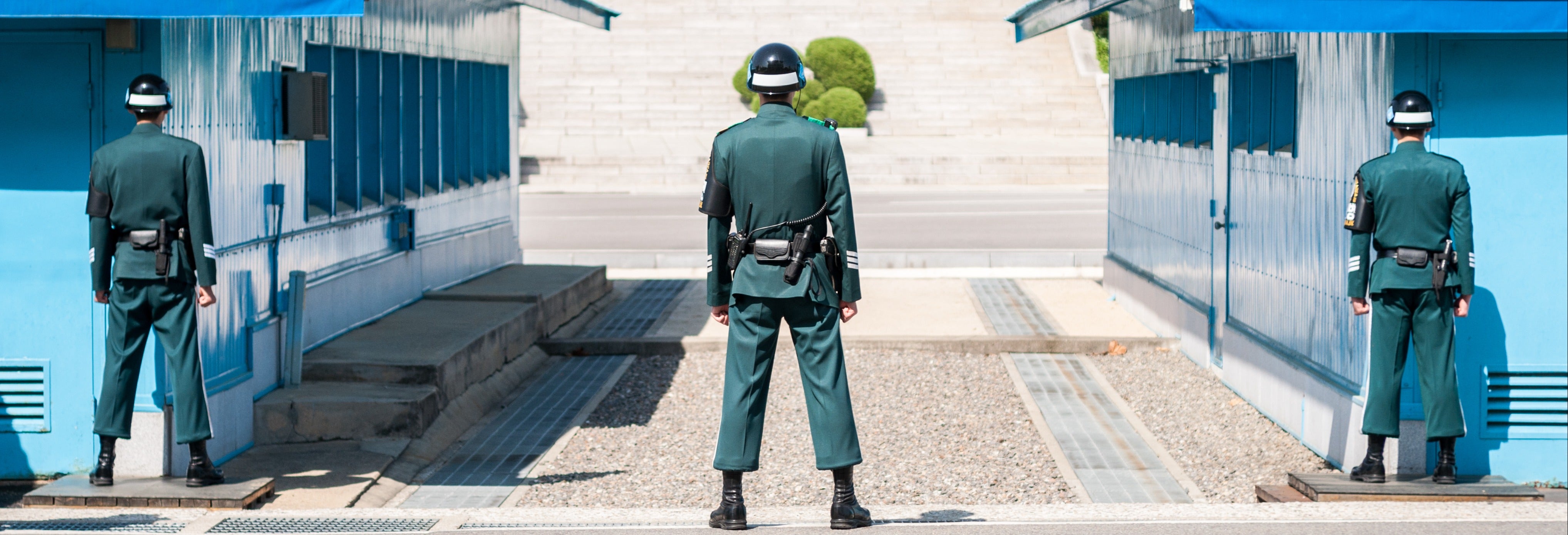
Crowds month by month
Twelve months of Seoul at a glance — tap a month for the full picture.
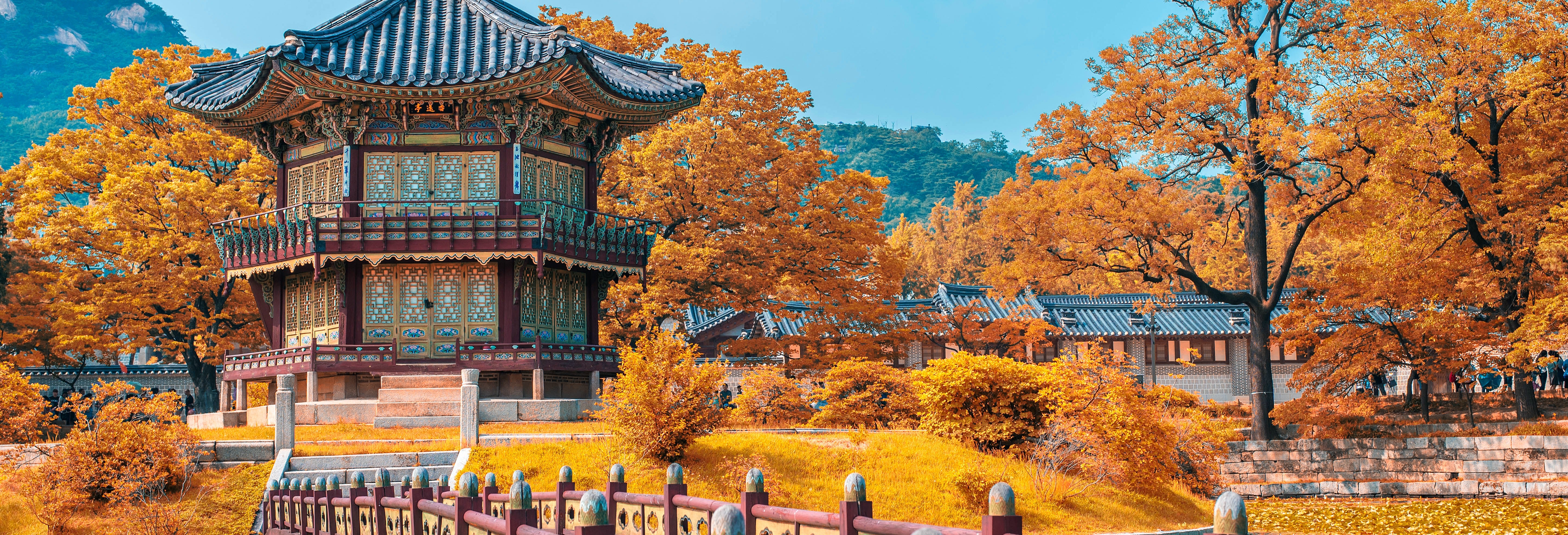
Every month in Seoul
Weather, crowds and what’s on — one page per month.
Weather through the year
Typical highs, lows and wet days.
Best day of the week
How the crowd moves through a typical week.
Tue is normally the calmest day of the week.
Best time of day
The daily rhythm, hour by hour.
The 9:00 AM window is usually the calmest of the day.
Where the crowd gathers
A typical peak afternoon in the centre.
How long to stay
Four days for the palaces, the markets and two or three neighbourhoods; five or six with a DMZ trip or an overnight to Gyeongju or Busan.
Local timing tips
- Wearing hanbok gets you free entry to all four royal palaces, and a rental from the shops around Gyeongbokgung costs less than the combined ticket.
- Check the fine-dust forecast between March and May; on a bad day the mountain views vanish entirely and a mask is genuinely useful.
- Gyeongbokgung closes on Tuesdays and Changdeokgung on Mondays — do not stack both palaces onto the wrong day.
- The subway is the fastest way across the city and runs on the same T-money card as the buses and most taxis.
Frequently asked questions
When is the best time to visit Seoul?
The best time to visit Seoul is January, the quietest month of the year, or the shoulder weeks around February when the crowd eases but the weather still holds.
What is the cheapest and quietest month in Seoul?
January is the quietest month in Seoul, with a modelled crowd level near 48/100 and typical highs of 2°C.
When is Seoul most crowded?
Seoul peaks in October, when both visitor numbers and prices are at their highest.
How many days do you need in Seoul?
Four days for the palaces, the markets and two or three neighbourhoods; five or six with a DMZ trip or an overnight to Gyeongju or Busan.
Other attractions
Photo: Ethan Brooke · Pexels