
Athens
Shoulder months win outright — spring and October beat summer on every measure.
When to visit Athens
Athens is calmest in January and busiest in July. For the best balance of decent weather and smaller crowds, aim for February.
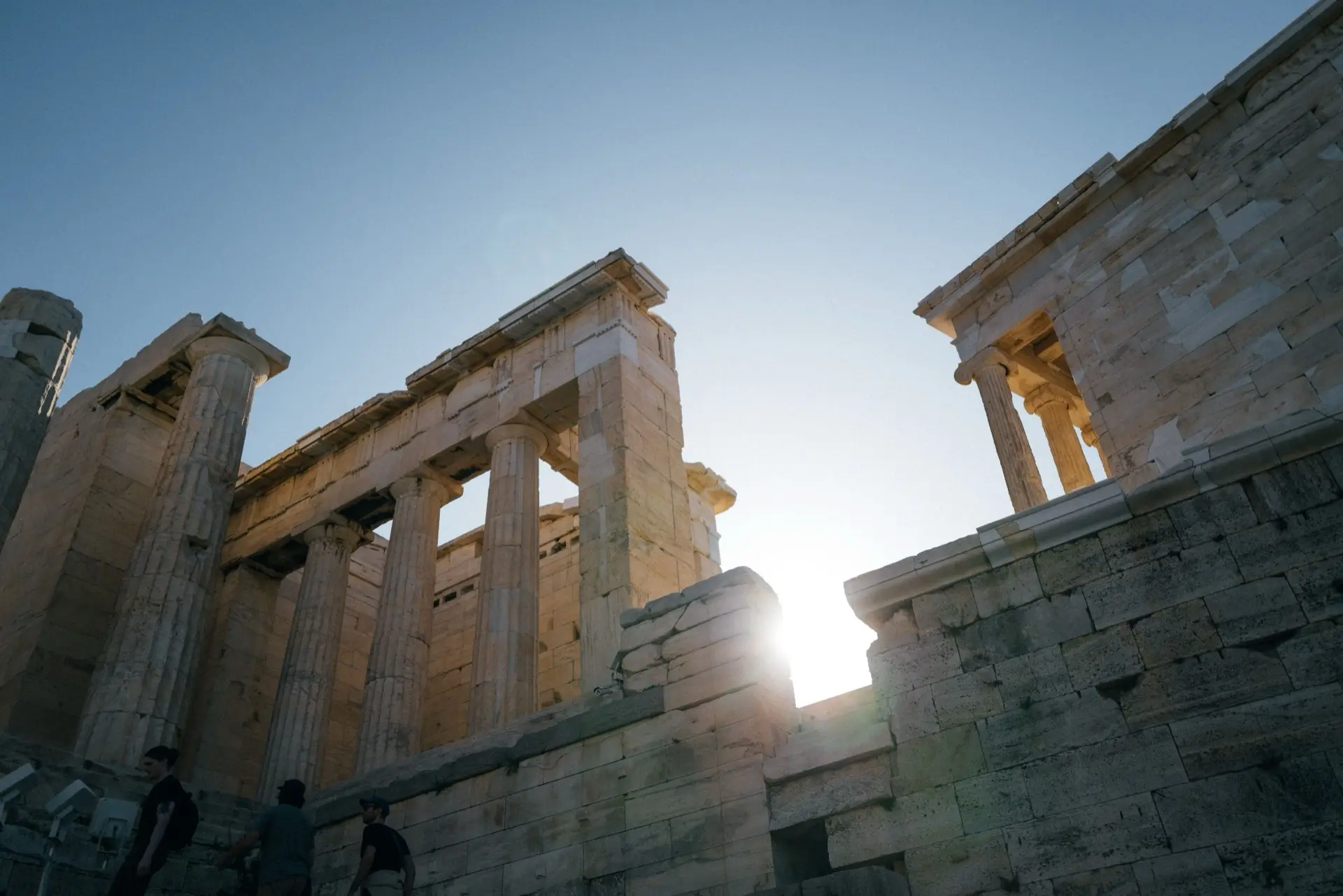
Athens carries two crowds at once. One is here for the city: the Acropolis, its museum, Plaka and the National Archaeological Museum. The other is passing through on the way to the islands, arriving at Piraeus by ferry or cruise ship and spending a single compressed day on the rock. Cruise season runs roughly April to October and peaks in June and September, and it lands hard on the Acropolis between about ten and two.
Summer is the wrong time to visit and the numbers still go up. July and August routinely hit 34°C with almost no shade on the site itself, and during heatwaves the ministry closes the Acropolis in the early afternoon. August is complicated further by the 15th, when much of the city genuinely empties for the holiday and a lot of neighbourhood businesses shut for a fortnight.
The shoulders are unambiguously better. April and May give you wildflowers on the Acropolis slopes, comfortable walking temperatures and long light; October gives you warm evenings in Plaka with a fraction of the summer load. Winter is the outright off-peak and much milder than most people expect — 13–15°C by day, some rain, and the Acropolis Museum a genuine pleasure at any hour.
Book things to do
Tours and tickets in Athens, from our booking partner.
 Free cancellation
 Free cancellation
 Free cancellation
 Free cancellation
Crowds month by month
Twelve months of Athens at a glance — tap a month for the full picture.
Every month in Athens
Weather, crowds and what’s on — one page per month.
Weather through the year
Typical highs, lows and wet days.
Best day of the week
How the crowd moves through a typical week.
Tue is normally the calmest day of the week.
Best time of day
The daily rhythm, hour by hour.
The 9:00 AM window is usually the calmest of the day.
Where the crowd gathers
A typical peak afternoon in the centre.
Cruise days change everything
Athens is a cruise port. On ship days the centre fills between mid-morning and late afternoon, then empties again.
How long to stay
Two full days covers the Acropolis, its museum and the old quarters; a third is worth it for Cape Sounion or the National Archaeological Museum.
If you want the full-year view before picking dates, visitbymonth's month-by-month breakdown of Athens tracks how weather and prices move across the calendar.
Local timing tips
- The Acropolis is far calmer in the last two hours before closing, once the cruise groups have gone back to Piraeus.
- The combined archaeological ticket covers seven sites over five days and costs only a little more than the Acropolis alone.
- In July and August the site can close in the early afternoon during heatwaves — check the ministry announcement the night before.
- Ferry departures from Piraeus cluster around 7am, so if you are island-hopping, sleep near the port rather than in Plaka the night before.
Attractions in Athens
Frequently asked questions
When is the best time to visit Athens?
The best time to visit Athens is January, the quietest month of the year, or the shoulder weeks around February when the crowd eases but the weather still holds.
What is the cheapest and quietest month in Athens?
January is the quietest month in Athens, with a modelled crowd level near 38/100 and typical highs of 13°C.
When is Athens most crowded?
Athens peaks in July, when both visitor numbers and prices are at their highest.
How many days do you need in Athens?
Two full days covers the Acropolis, its museum and the old quarters; a third is worth it for Cape Sounion or the National Archaeological Museum.
Other attractions


Photo: Matheus Bertelli · Pexels