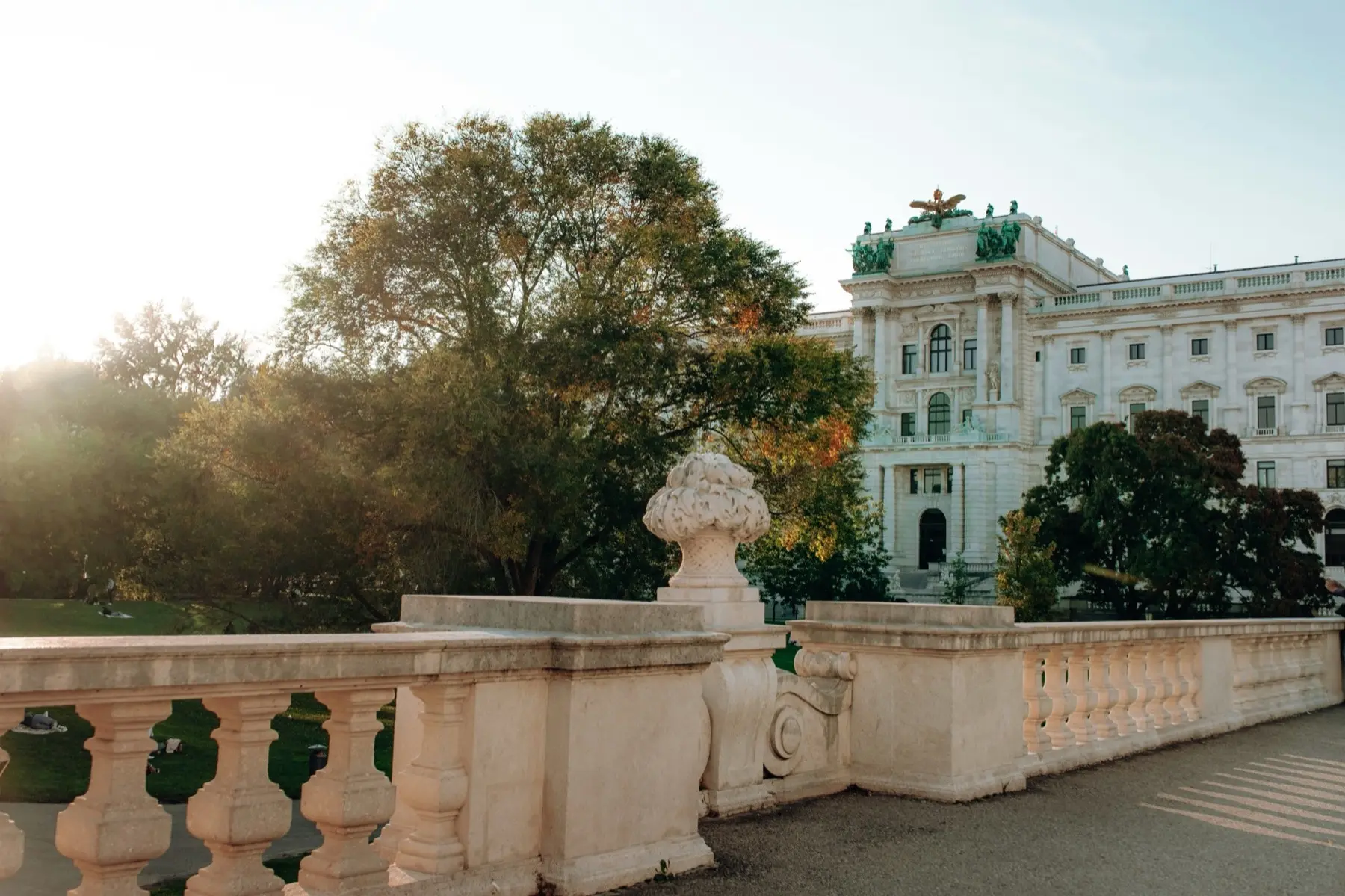
Vienna
The one capital where December earns its crowd — and February is genuinely empty.
When to visit Vienna
Vienna is calmest in January and busiest in July. For the best balance of decent weather and smaller crowds, aim for February.
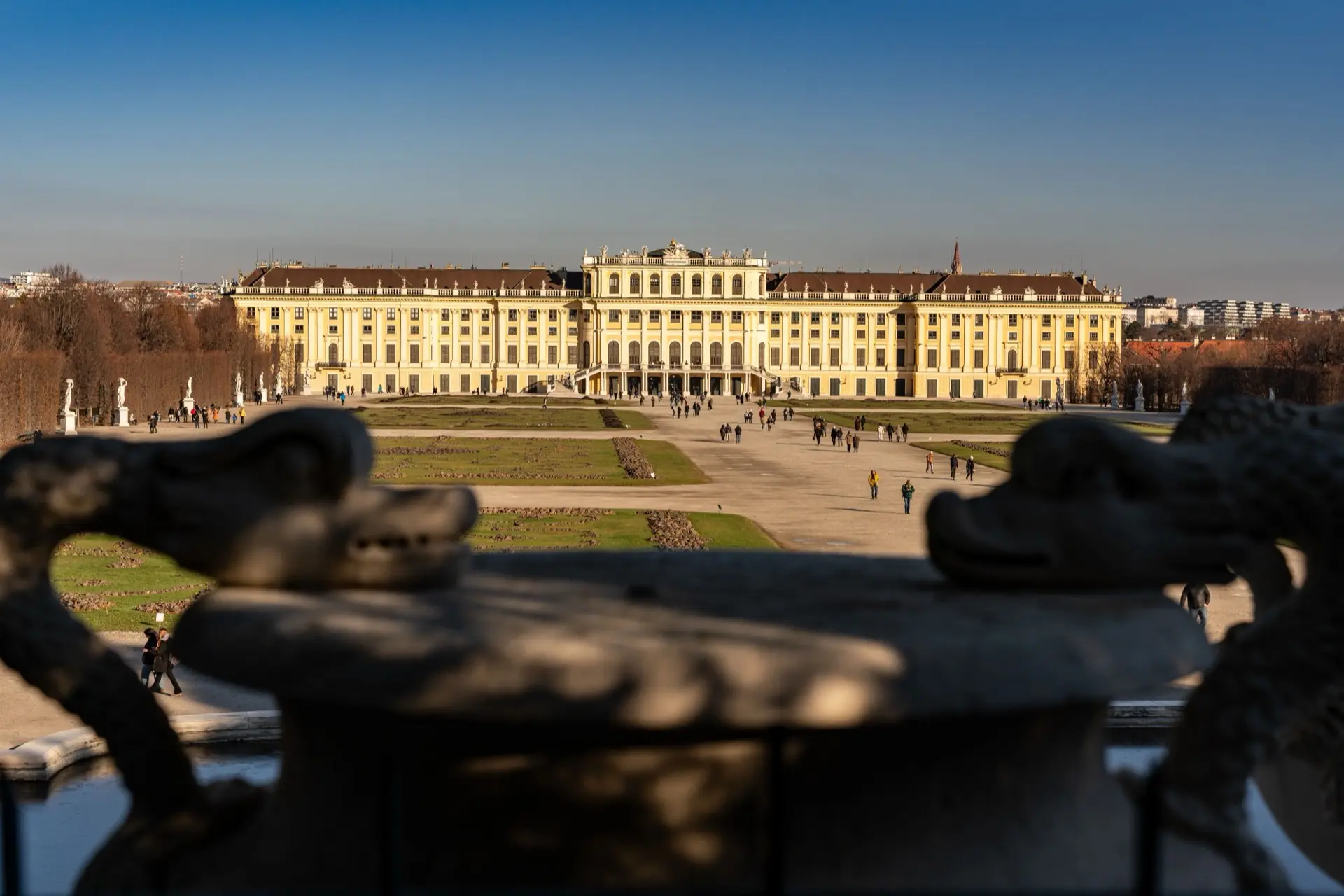
Vienna spreads its visitors better than most European capitals because its attractions are not concentrated in one lane. Schönbrunn is four kilometres from the Hofburg, the great galleries sit on the Ring, and the Naschmarkt, the Prater and the wine taverns of Grinzing are all in different directions. The consequence is a city that rarely feels overwhelmed even in its busiest weeks — the pressure shows up as sold-out concert tickets and full Schönbrunn time slots rather than impassable streets.
The calendar has two engines. One is the classical music season, which runs from September to June and is the reason winter here is not a dead zone: the Staatsoper performs almost nightly, the Musikverein is booked out, and the ball season from New Year through Shrove Tuesday fills the grand houses. The other is Christmas, when a dozen markets open from mid-November and the Rathausplatz alone draws millions across six weeks. December weekends are the busiest non-summer days of the Viennese year.
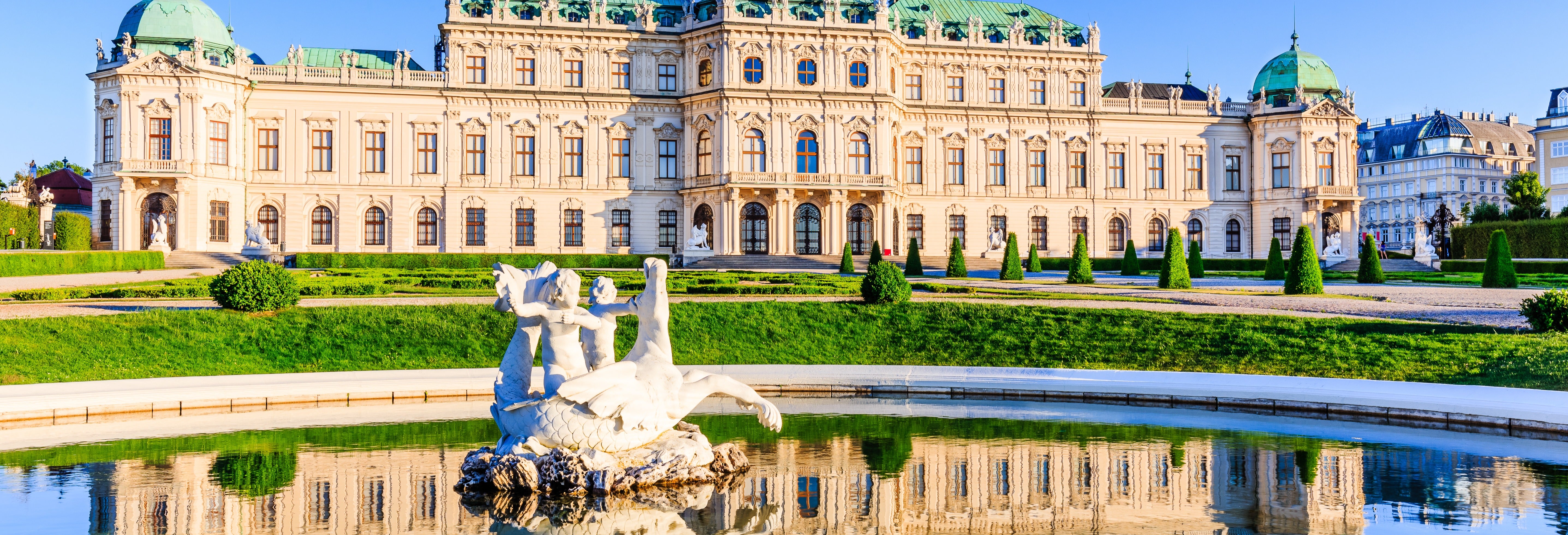
February is the quietest month and the best value, particularly on hotels, with the ball season the only thing lifting demand. Late April to early June is the strongest weather window: the gardens at Schönbrunn and the Belvedere are at their peak, the Prater is open, and the opera has not yet closed for the summer. July and August are warm and busy with overseas visitors, but with the Staatsoper dark and many Viennese away, the city runs at a slightly lower cultural temperature than its reputation suggests.
Book things to do
Tours and tickets in Vienna, from our booking partner.
Crowds month by month
Twelve months of Vienna at a glance — tap a month for the full picture.
Every month in Vienna
Weather, crowds and what’s on — one page per month.
Weather through the year
Typical highs, lows and wet days.
Best day of the week
How the crowd moves through a typical week.
Tue is normally the calmest day of the week.
Best time of day
The daily rhythm, hour by hour.
The 9:00 AM window is usually the calmest of the day.
Where the crowd gathers
A typical peak afternoon in the centre.
How long to stay
Three full days covers the Hofburg, Schönbrunn and two of the major galleries at a civilised pace; a fourth buys you the Belvedere and a wine tavern evening.
Local timing tips
- Standing-room tickets at the Staatsoper go on sale about eighty minutes before curtain for a few euros — join the queue at the Operngasse side door.
- Schönbrunn palace entry is timed and the morning slots go first; the gardens, the Gloriette hill and the maze are free and open long before the palace.
- The Kunsthistorisches Museum and the Leopold both open late one evening a week, which is the calmest time to see either.
- A 24 or 48-hour transport pass beats single tickets after three journeys, and the tram ride around the Ring on lines 1 and 71 is the cheapest city tour there is.
Attractions in Vienna
Frequently asked questions
When is the best time to visit Vienna?
The best time to visit Vienna is January, the quietest month of the year, or the shoulder weeks around February when the crowd eases but the weather still holds.
What is the cheapest and quietest month in Vienna?
January is the quietest month in Vienna, with a modelled crowd level near 42/100 and typical highs of 4°C.
When is Vienna most crowded?
Vienna peaks in July, when both visitor numbers and prices are at their highest.
How many days do you need in Vienna?
Three full days covers the Hofburg, Schönbrunn and two of the major galleries at a civilised pace; a fourth buys you the Belvedere and a wine tavern evening.
Other attractions
Photo: Daniel J. Schwarz · Pexels