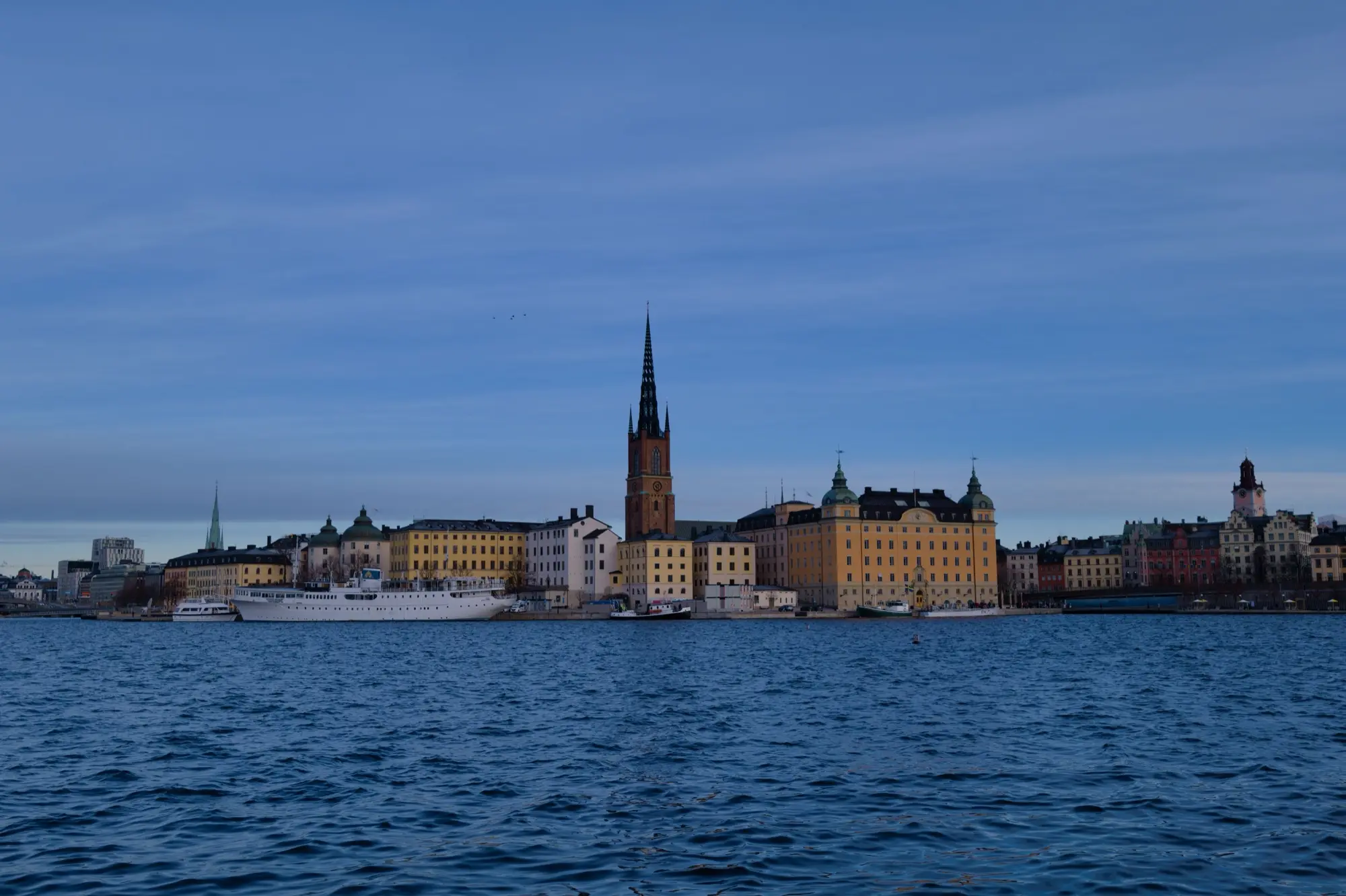
Sweden
Sweden runs on three calendars, the capital’s, the far north’s and the south’s, and the whole country slows for Midsummer and July.
When to visit Sweden
Across Sweden as a whole, January is typically the calmest month and July the busiest. Crowds are not uniform, though — see how the regions differ below.
The only destination covered here is Stockholm, so the crowd line on this page is Stockholm’s: lowest in January, highest in July, with August close behind. It describes the capital, not the country. Lapland, the west coast and the south each have a different season, and the figures here cannot tell you how full they are.
The national rhythm is set by holidays. Employees are entitled by law to at least 25 days of leave a year, including four consecutive weeks in summer, children are out of school for more than two months, and many adults take most of July. Some small businesses close for much of the month and the summer houses fill. Midsummer is the one weekend when almost everything stops, and mid-August is when schools and offices start again.
Midsummer Day is the Saturday between 20 and 26 June and is a public holiday; the Friday before it, Midsummer Eve, is a day off by custom, so shops, restaurants and many attractions close or shorten their hours. The other dates that matter for planning are Easter (Good Friday to Easter Monday), 1 May, Ascension, 6 June, All Saints’ Day on a Saturday at the turn of October and November, and Christmas, when Christmas Eve is kept as a day off in practice even though it is not a public holiday.
Book things to do
Sweden: tours and tickets in Stockholm, from our booking partner.

 Free cancellation
 Free cancellation
It is not the same everywhere
The far north has two seasons that Stockholm lacks. In Kiruna the midnight sun runs from 27 May to 14 July, and the northern lights can be seen between September and April, usually strongest in September, October and March; in between, the summer nights are too bright for aurora. Winter there is a snow season, and the Ice Hotel at Jukkasjärvi is open from mid-December to the end of April. The south and the west coast sit at the other end of the country: milder in winter, with rain in any month, and a season that mostly begins in summer, when the coast and the islands fill with Swedish holidaymakers. Stockholm lies on the east coast between the two, with a clear four-season year.
Getting around
Sweden is long, and distances reward planning. Stockholm to Gothenburg is about three hours by train or about six and a half by long-distance bus, and Gothenburg is three and a half hours from Copenhagen. Going north is a different scale: Kiruna has flights from Stockholm Arlanda, and overnight trains also run north from the capital, so check SJ for the current timetable before building a trip around them. Winter tyres are required by law on wintry roads between December and March.
Crowds month by month across Sweden
Averaged across the 1 destinations we cover — tap a month for the full picture.
Weather across Sweden
Averaged across our destinations. The spread column shows how far apart the warmest and coolest are.
More tours and tickets
More options from our booking partner.
Where we have data in Sweden
Each city has its own crowd calendar and twelve month pages.
Every month in Sweden
Country-level tips
- Plan Midsummer early. On the Friday and Saturday between 19 and 26 June many Swedes leave town, and shops, restaurants and attractions in the cities close or shorten their hours; arrive with meals and transport sorted.
- Do not plan the midnight sun and the aurora for the same trip. The sun does not set in Kiruna from 27 May to 14 July, and the northern lights need darkness, so the aurora season runs from September to April, with the strongest displays usually in September, October and March.
- July is the holiday month for Swedes, so expect some small businesses in towns to be closed and the coast and islands to be full of domestic holidaymakers; book coastal and island accommodation well ahead.
- Public holidays close museums even in the capital: in 2026 the Nationalmuseum is closed on Christmas Eve, Christmas Day, New Year’s Eve and New Year’s Day, so check the venue’s holiday hours before travelling in Christmas week.
Frequently asked questions
When is the best time to visit Sweden?
The best time to visit Sweden is around January, when crowds across the country sit near 38/100 and average highs are about 0°C.
What is the quietest month in Sweden?
January is the quietest month across the destinations we track in Sweden, averaging 38/100.
When is Sweden most crowded?
Sweden peaks in July, when domestic and international travel overlap.