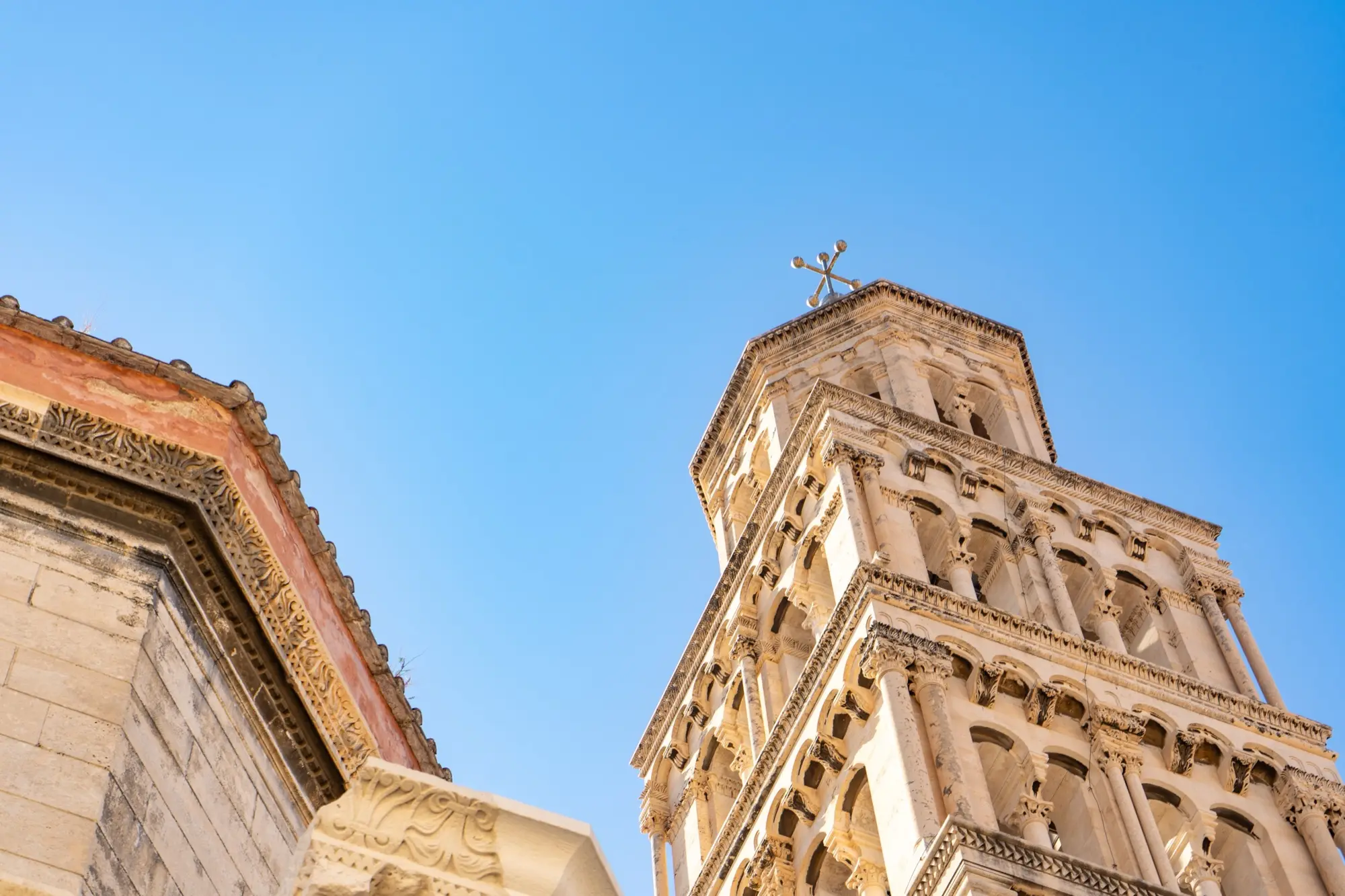
Split
Winter is quiet and often wet; July and August fill the palace lanes and the ferry quays.
When to visit Split
Split is calmest in January and busiest in June. For the best balance of decent weather and smaller crowds, aim for February.
Split is built around Diocletian’s Palace, a Roman complex that is still a living neighbourhood of narrow lanes, shops and homes. Official overnight-stay data for Adriatic Croatia (Eurostat, 2022 to 2025) put the busiest month in August, with July just behind and June and September next; from November to March the series is at its lowest, and January is the calmest month.
The city is also a ferry hub for the Dalmatian islands and a cruise port, so the day’s crowd follows the boats as much as the calendar. Midday is the busiest stretch around the Riva and the palace gates; early morning and late evening stay calmer in every month. The weather station at Marjan, 1 km from the old town, gives January highs of 11 °C, eight rainy days and about nine hours of daylight.
For a balance of open sights, sea and space, aim for May, June and September, with October as a quieter extension. May has highs of 24 °C and six rainy days, and October keeps 21 °C with clearly fewer people than September. July and August bring 31 °C and the longest queues, and winter is the calmest time but cooler and wetter, with island ferries and seasonal venues on reduced schedules.
Book things to do
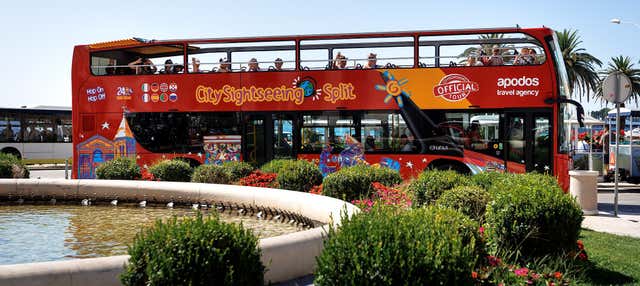
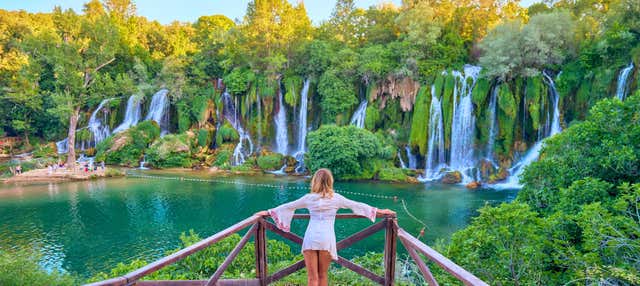
Tours and tickets in Split, from our booking partner.
 Free cancellation
 Free cancellation
 Free cancellation
 Free cancellation
Crowds month by month
Twelve months of Split at a glance — tap a month for the full picture.
Every month in Split
Weather, crowds and what’s on — one page per month.
Quietest month: Split in January
Weather through the year
Typical highs, lows and wet days.
Best day of the week
How the crowd moves through a typical week.
Tue is normally the calmest day of the week.
Best time of day
The daily rhythm, hour by hour.
The 9:00 AM window is usually the calmest of the day.
Where the crowd gathers
A typical peak afternoon in the centre.
Cruise days change everything
Split is a cruise port. On ship days the centre fills between mid-morning and late afternoon, then empties again.
How long to stay
Two days for the palace, the Riva and Marjan hill, three with a day trip to Trogir or Salona, four or more with an island.
Local timing tips
- Diocletian’s Palace is a public part of the old town, so its lanes can be walked at any hour; the cathedral, its bell tower and the underground halls are visited separately, and mornings are the quietest time for them.
- Island ferries to Brač, Hvar and Vis run more often in summer and thinner off season; check the operator’s timetable for your date and book car spaces early for July and August.
- Cruise ships berth beside the old town, and on days with several in port the Riva and the palace gates are busiest around midday; if you can, look up the calls for your dates before fixing the day for the main sights.
- The Split Summer Festival runs from mid-July to mid-August, with performances in historic spaces such as the palace Peristyle; check the festival programme for your dates, as evenings in the old town are busier then.
Where to stay
Outside peak season, nightly rates tend to be lower, and flexible dates help. Compare places to stay on Booking.com.
Frequently asked questions
When is the best time to visit Split?
The best time to visit Split is January, the quietest month of the year, or the shoulder weeks around February when the crowd eases but the weather still holds.
What is the cheapest and quietest month in Split?
January is the quietest month in Split, with a modelled crowd level near 8/100 and typical highs of 11°C.
When is Split most crowded?
Split peaks in June, when both visitor numbers and prices are at their highest.
How many days do you need in Split?
Two days for the palace, the Riva and Marjan hill, three with a day trip to Trogir or Salona, four or more with an island.
Sources
Weather: 1995–2024 averages from the SPLIT MARJAN weather station (NOAA GHCN-Daily); rain days count days with at least 1 mm.
Monthly crowd index: calculated from recorded overnight stays (table tour_occ_nin2m, 2022–2025; area: Adriatic Croatia (HR03)), published byEurostat.
Crowd scores are modelled estimates, not live counts.How the model works
Events, holidays and practical notes are checked against these official pages:
Other attractions
Photo: Oliver Schröder · Pexels