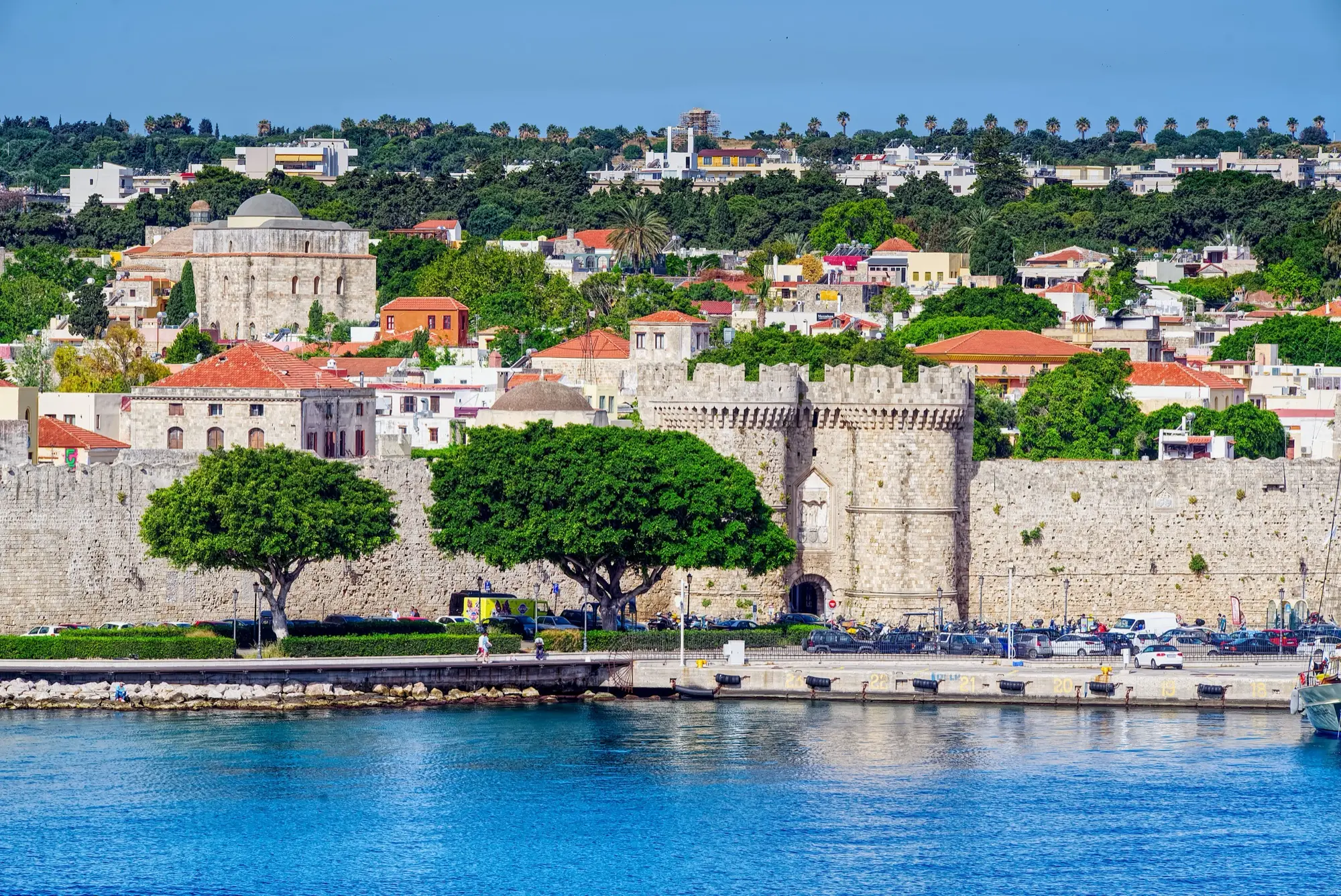
Rhodes
Winter is mild and quiet; June to September sit at the top of the crowd scale, with the Old Town shared with cruise visitors.
When to visit Rhodes
Rhodes is calmest in January and busiest in June. For the best balance of decent weather and smaller crowds, aim for February.
Rhodes has two speeds. The walled Old Town and Rhodes Town stay open and lived in all year, while the beach resorts along the coast run on a season that opens in spring and winds down in October. In winter you get the medieval streets almost to yourself, but many seaside hotels, tavernas and boat trips are shut.
The island is also a cruise port, so the Old Town fills on days with several ships in port, mostly around the middle of the day. Lindos and the main beaches are busiest from late morning to mid-afternoon; the first and last hours of the day are calmer in any month, and the north-west wind of high summer shapes which coast is pleasant.
For open venues, warm weather and manageable crowds, May (crowd 81, highs of 22 °C) and October (58, 24 °C) are the months to weigh against the summer; April, at 30, is quiet but still cool, with highs of 18 °C. From November to March the series is at 8, with highs between 15 and 20 °C, 12 rainy days in January and December, and many seaside businesses closed.
Book things to do
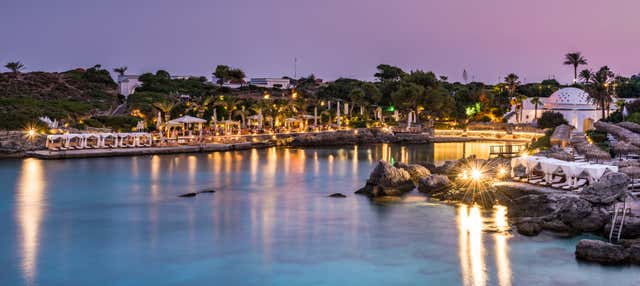
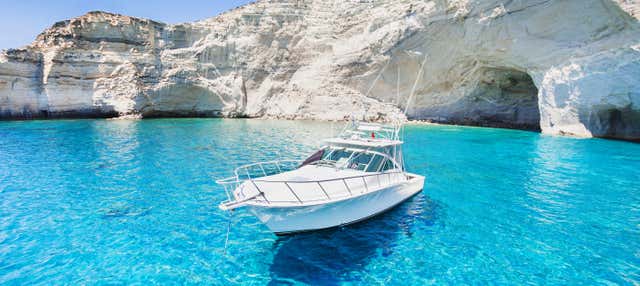
Tours and tickets in Rhodes, from our booking partner.
 Free cancellation
 Free cancellation
 Free cancellation
 Free cancellation
 Free cancellation
 Free cancellation
Crowds month by month
Twelve months of Rhodes at a glance — tap a month for the full picture.
Every month in Rhodes
Weather, crowds and what’s on — one page per month.
Quietest month: Rhodes in January
Weather through the year
Typical highs, lows and wet days.
Best day of the week
How the crowd moves through a typical week.
Tue is normally the calmest day of the week.
Best time of day
The daily rhythm, hour by hour.
The 9:00 AM window is usually the calmest of the day.
Where the crowd gathers
A typical peak afternoon in the centre.
Cruise days change everything
Rhodes is a cruise port. On ship days the centre fills between mid-morning and late afternoon, then empties again.
How long to stay
Two days for the Old Town and Rhodes Town, three with Lindos and one coast, four or five if you add a boat trip to a nearby island.
Local timing tips
- The Old Town, a UNESCO World Heritage site, is walled and lived in; its main street and the Palace of the Grand Master draw most visitors, so arrive when it opens or after the day-trip groups leave.
- Lindos is the island’s most visited village and is busiest between late morning and mid-afternoon; an early start or a late-afternoon visit avoids the heaviest foot traffic.
- Outside May to October, many seaside businesses and some boat trips do not run; check the operator or the venue before building a day around them.
- In July and August the strong summer wind blows mostly from the north-west, so west-facing beaches can be rough while the east coast is often calmer; check the forecast before choosing a beach.
Where to stay
Outside peak season, nightly rates tend to be lower, and flexible dates help. Compare places to stay on Booking.com.
Frequently asked questions
When is the best time to visit Rhodes?
The best time to visit Rhodes is January, the quietest month of the year, or the shoulder weeks around February when the crowd eases but the weather still holds.
What is the cheapest and quietest month in Rhodes?
January is the quietest month in Rhodes, with a modelled crowd level near 8/100 and typical highs of 15°C.
When is Rhodes most crowded?
Rhodes peaks in June, when both visitor numbers and prices are at their highest.
How many days do you need in Rhodes?
Two days for the Old Town and Rhodes Town, three with Lindos and one coast, four or five if you add a boat trip to a nearby island.
Sources
Weather: 1995–2024 averages from the ERA5 climate reanalysis (Copernicus, via Open-Meteo); rain days count days with at least 1 mm.
Monthly crowd index: calculated from recorded overnight stays (table tour_occ_nin2m, 2022–2025; area: South Aegean (EL42)), published byEurostat.
Crowd scores are modelled estimates, not live counts.How the model works
Events, holidays and practical notes are checked against these official pages:
Other attractions


Photo: Mark Thomas · Pexels