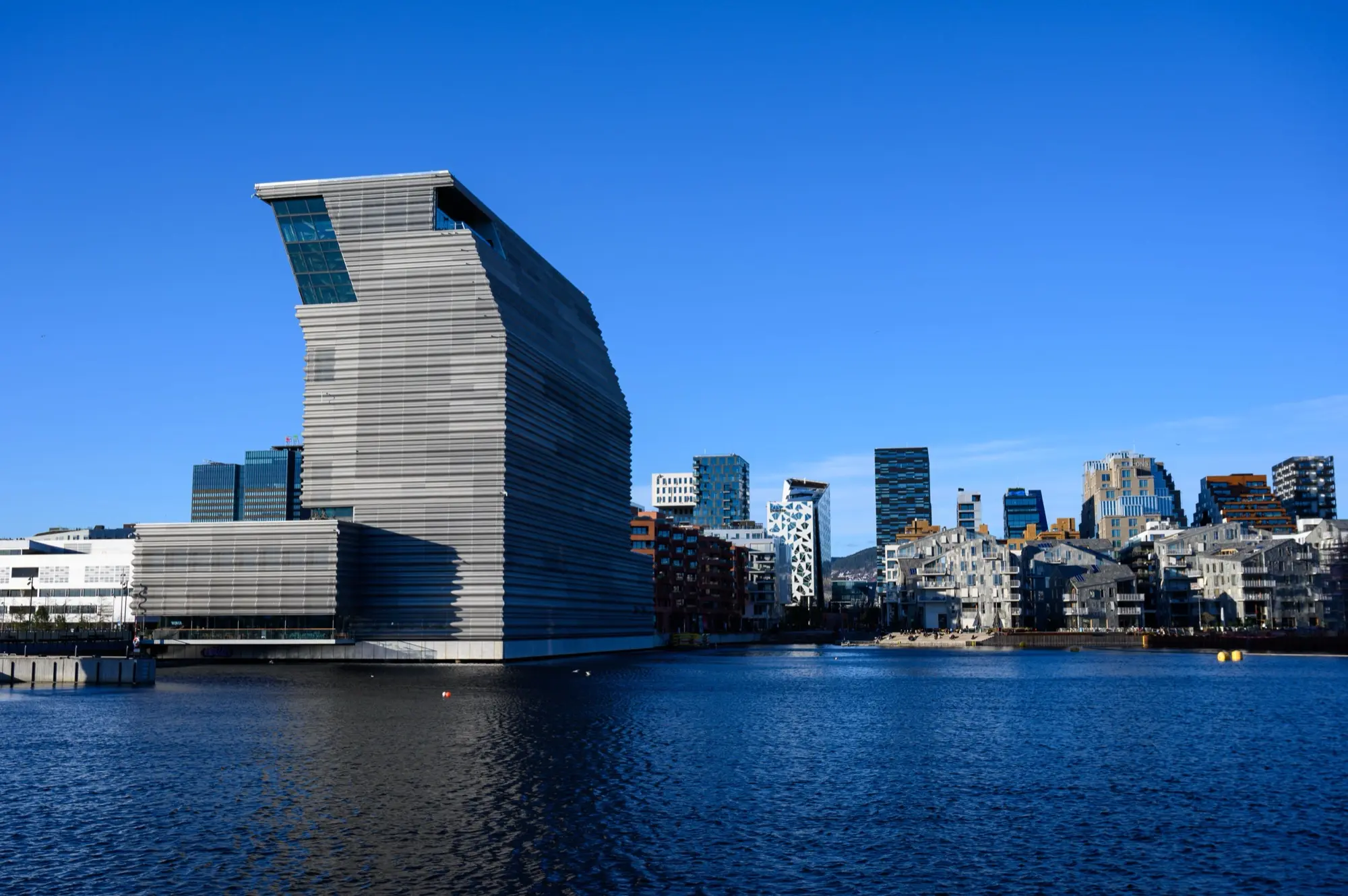
Oslo
January is cold, dark and the calmest month; August is bright, full and shared with two music festivals.
When to visit Oslo
Oslo is calmest in January and busiest in August. For the best balance of decent weather and smaller crowds, aim for February.
Oslo is a compact capital on a fjord, and its crowd follows the daylight closely. January has the lowest visitor index of the year, 38, with highs of 0 °C, lows of -5 °C and about six hours of daylight. August has the highest, 85, with highs of 22 °C and 15 hours of light, and July is close behind at 83.
The spring months are the sensible compromise. April and May have an index of 51 and 63, with highs of 11 °C and 17 °C and 14 to 17 hours of daylight, so there is time for the outdoors and the numbers stay well below the summer figures. September is still at 68, but the days shorten to 12 hours and the highs fall to 17 °C.
Autumn trades light for space. October and November have an index of 61 and 59, with highs of 10 °C and 5 °C and eleven rainy days each. December falls to 50, with six hours of daylight and 1 °C by day, which suits museums and the Christmas season more than long walks.
Book things to do
Tours and tickets in Oslo, from our booking partner.
 Free cancellation
 Free cancellation
 Free cancellation
 Free cancellation
Crowds month by month
Twelve months of Oslo at a glance — tap a month for the full picture.
Every month in Oslo
Weather, crowds and what’s on — one page per month.
Quietest month: Oslo in January
Weather through the year
Typical highs, lows and wet days.
Best day of the week
How the crowd moves through a typical week.
Tue is normally the calmest day of the week.
Best time of day
The daily rhythm, hour by hour.
The 9:00 AM window is usually the calmest of the day.
Where the crowd gathers
A typical peak afternoon in the centre.
How long to stay
Two days cover the centre and the main museums; three if you add a ferry out to the fjord islands or a walk in the Nordmarka forest.
Local timing tips
- If you want to see Oslo in August, book early: the month has the highest index of the year, 85, and the Øya Festival and the Oslo Jazz Festival both take place in it.
- From November to February plan outdoor visits around midday. Daylight is down to seven hours in November and six in December and January, and lows reach -5 °C in January.
- 17 May, Constitution Day, is a public holiday and the city centre belongs to local families that day; May is also the month when the index starts to rise, from 51 in April to 63.
- For a quiet visit with milder weather aim for April or May. For a quiet visit indoors, October and November (index 61 and 59) suit museums, with eleven rainy days in each month.
Where to stay
Outside peak season, nightly rates tend to be lower, and flexible dates help. Compare places to stay on Booking.com.
Frequently asked questions
When is the best time to visit Oslo?
The best time to visit Oslo is January, the quietest month of the year, or the shoulder weeks around February when the crowd eases but the weather still holds.
What is the cheapest and quietest month in Oslo?
January is the quietest month in Oslo, with a modelled crowd level near 38/100 and typical highs of 0°C.
When is Oslo most crowded?
Oslo peaks in August, when both visitor numbers and prices are at their highest.
How many days do you need in Oslo?
Two days cover the centre and the main museums; three if you add a ferry out to the fjord islands or a walk in the Nordmarka forest.
Sources
Weather: 1995–2024 averages from the Oslo Blindern weather station (NOAA GHCN-Daily); rain days count days with at least 1 mm.
Monthly crowd index: calculated from recorded overnight stays (table 14172 Guest nights, by region, type of accommodation, country of residence, contents and month (tourism region Oslo; hotels plus camping, holiday dwellings and youth hostels; 2022-2025), 2022–2025; area: Oslo (tourism region Oslo)), published byStatistics Norway (SSB).
Crowd scores are modelled estimates, not live counts.How the model works
Events, holidays and practical notes are checked against these official pages:
Other attractions
Photo: Nils R · Pexels