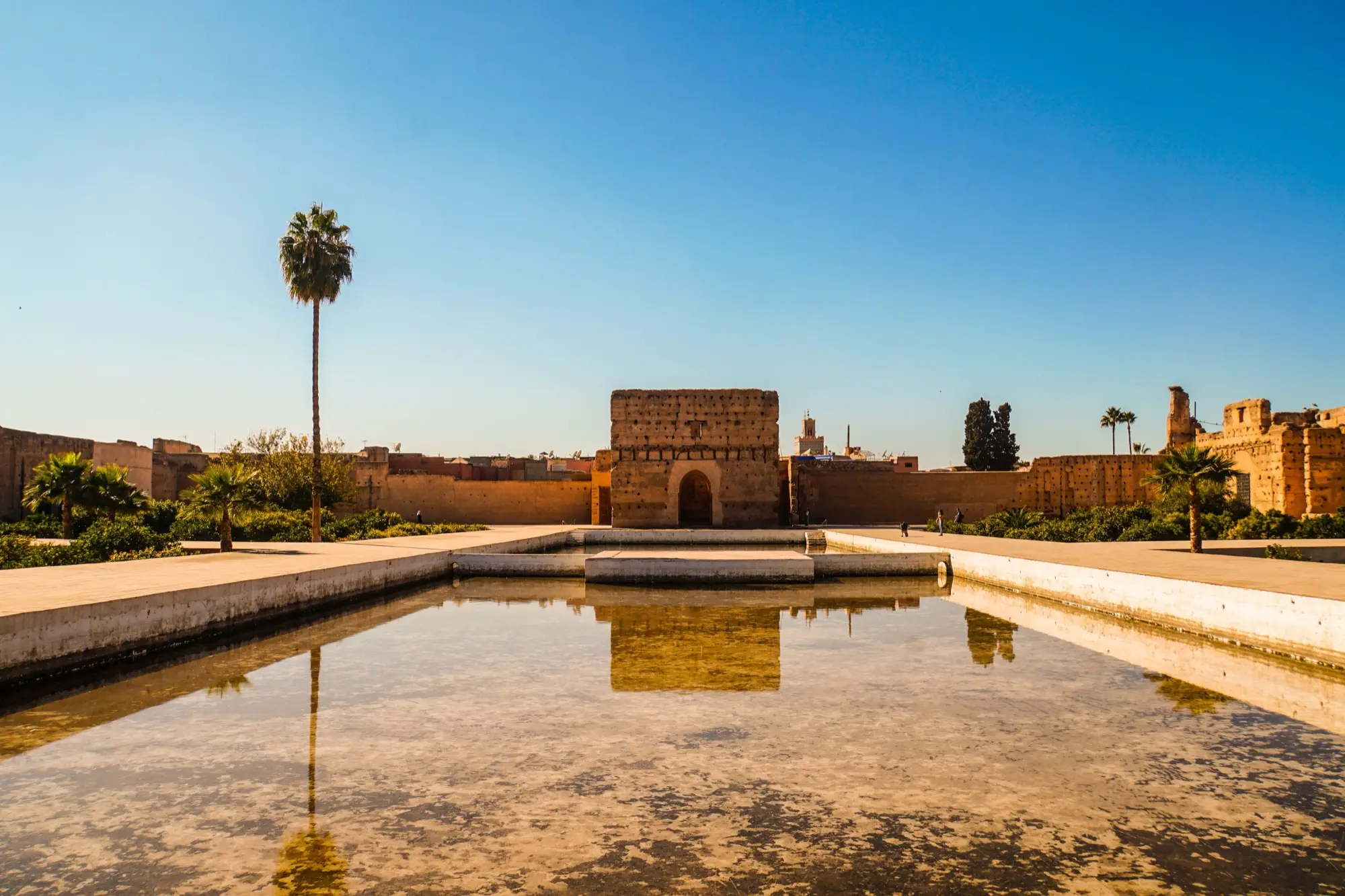
Marrakech
Spring and autumn sell out; late November and early December are the quiet bargain.
When to visit Marrakech
Marrakech is calmest in July and busiest in April. For the best balance of decent weather and smaller crowds, aim for August.
Marrakech has two peaks and two troughs, and both are driven by heat. Spring, from March into May, and autumn, from late September through November, are when the city is at its best: warm days, cool evenings, gardens in flower or in low golden light, and Atlas day trips that work all day rather than only at dawn.
July and August are the deep trough. Highs of 37 to 38 °C in dry desert air empty the medina between noon and five, and hotel rates fall to match — though the evenings on the Jemaa el-Fnaa are the liveliest of the year, which is some compensation. Winter is the second trough and a much gentler one: bright, dry days around 18 to 20 °C with genuinely cold nights, interrupted by a sharp two-week price spike over Christmas and New Year.
The best-value weeks are late November through mid-December, and the second half of May. Both give you comfortable weather and a medina that is not moving at tour-group pace. Ramadan, which shifts about eleven days earlier each year, is worth planning around either way: daytime cafés close, but the atmosphere after iftar is unlike anything else on the calendar.
Book things to do
Tours and tickets in Marrakech, from our booking partner.
Crowds month by month
Twelve months of Marrakech at a glance — tap a month for the full picture.
Every month in Marrakech
Weather, crowds and what’s on — one page per month.
Weather through the year
Typical highs, lows and wet days.
Best day of the week
How the crowd moves through a typical week.
Tue is normally the calmest day of the week.
Best time of day
The daily rhythm, hour by hour.
The 9:00 AM window is usually the calmest of the day.
Where the crowd gathers
A typical peak afternoon in the centre.
How long to stay
Three days for the medina, the gardens and one unhurried afternoon; four or five with the Atlas, Essaouira or the Agafay desert added.
Local timing tips
- If the old city is the point of the trip, stay in a riad inside the medina rather than in Gueliz — but ask them to send someone to meet you, because taxis cannot reach most riad doors.
- Agree a price before you get into a taxi, and before anyone starts guiding you. This is not a hostile city, but unpriced services end awkwardly.
- The Jardin Majorelle and the Yves Saint Laurent museum sell timed tickets online and the walk-up queue is long in every season — book them the week before.
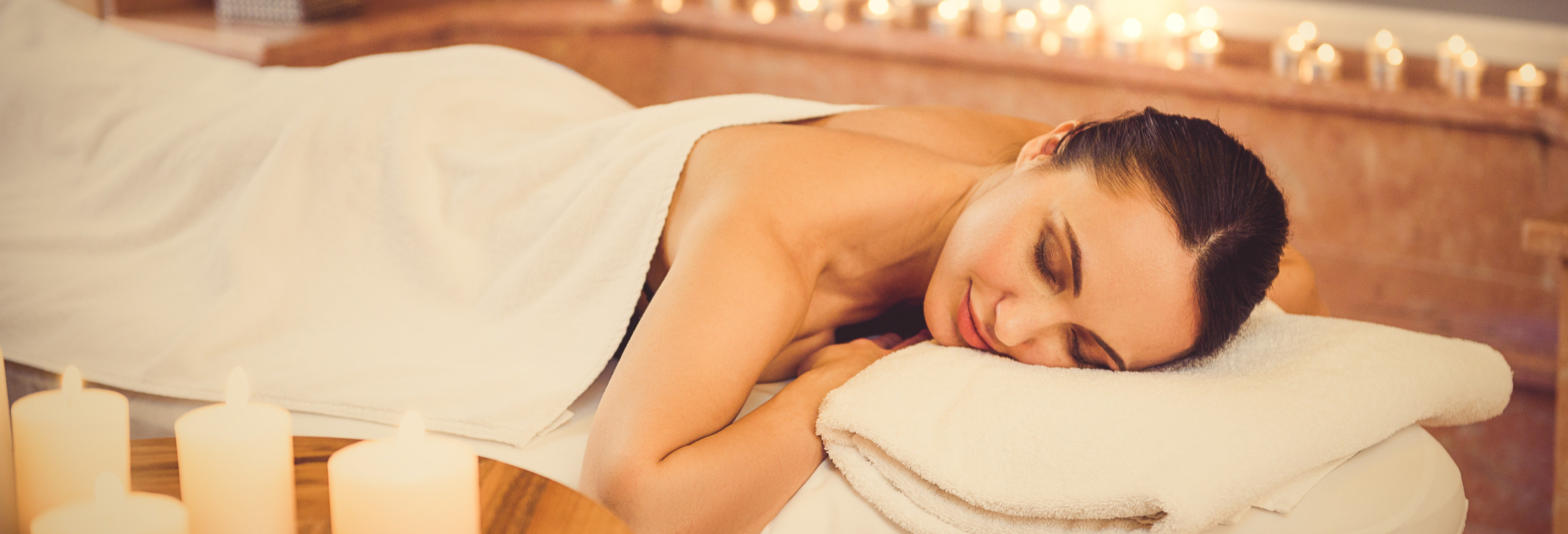
- Friday early afternoon is the quietest time in the souks and the busiest at the mosques, which makes it the moment for a garden or a hammam.
Frequently asked questions
When is the best time to visit Marrakech?
The best time to visit Marrakech is July, the quietest month of the year, or the shoulder weeks around August when the crowd eases but the weather still holds.
What is the cheapest and quietest month in Marrakech?
July is the quietest month in Marrakech, with a modelled crowd level near 46/100 and typical highs of 38°C.
When is Marrakech most crowded?
Marrakech peaks in April, when both visitor numbers and prices are at their highest.
How many days do you need in Marrakech?
Three days for the medina, the gardens and one unhurried afternoon; four or five with the Atlas, Essaouira or the Agafay desert added.
Other attractions
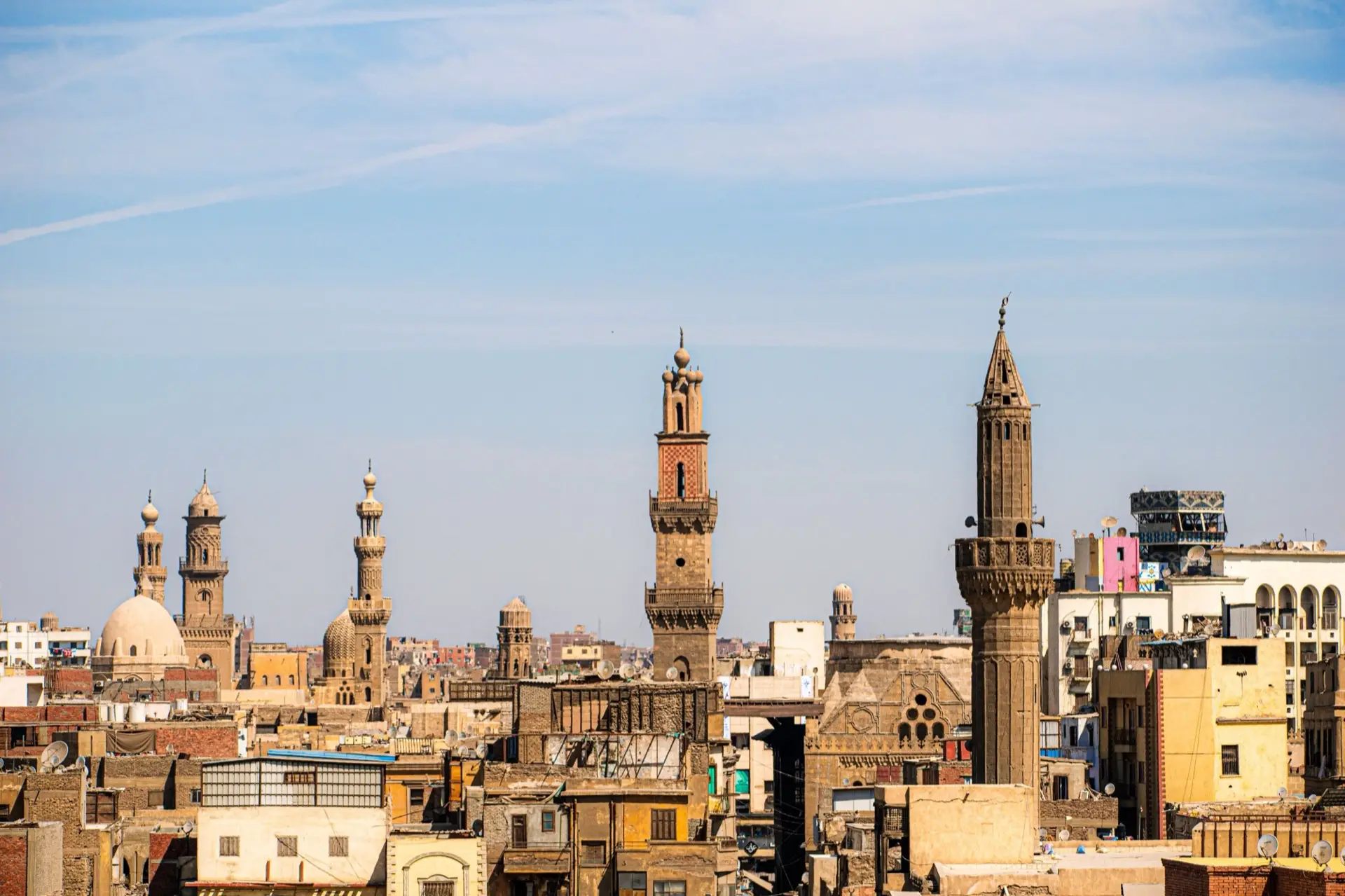
Photo: Domenico Bertazzo · Pexels