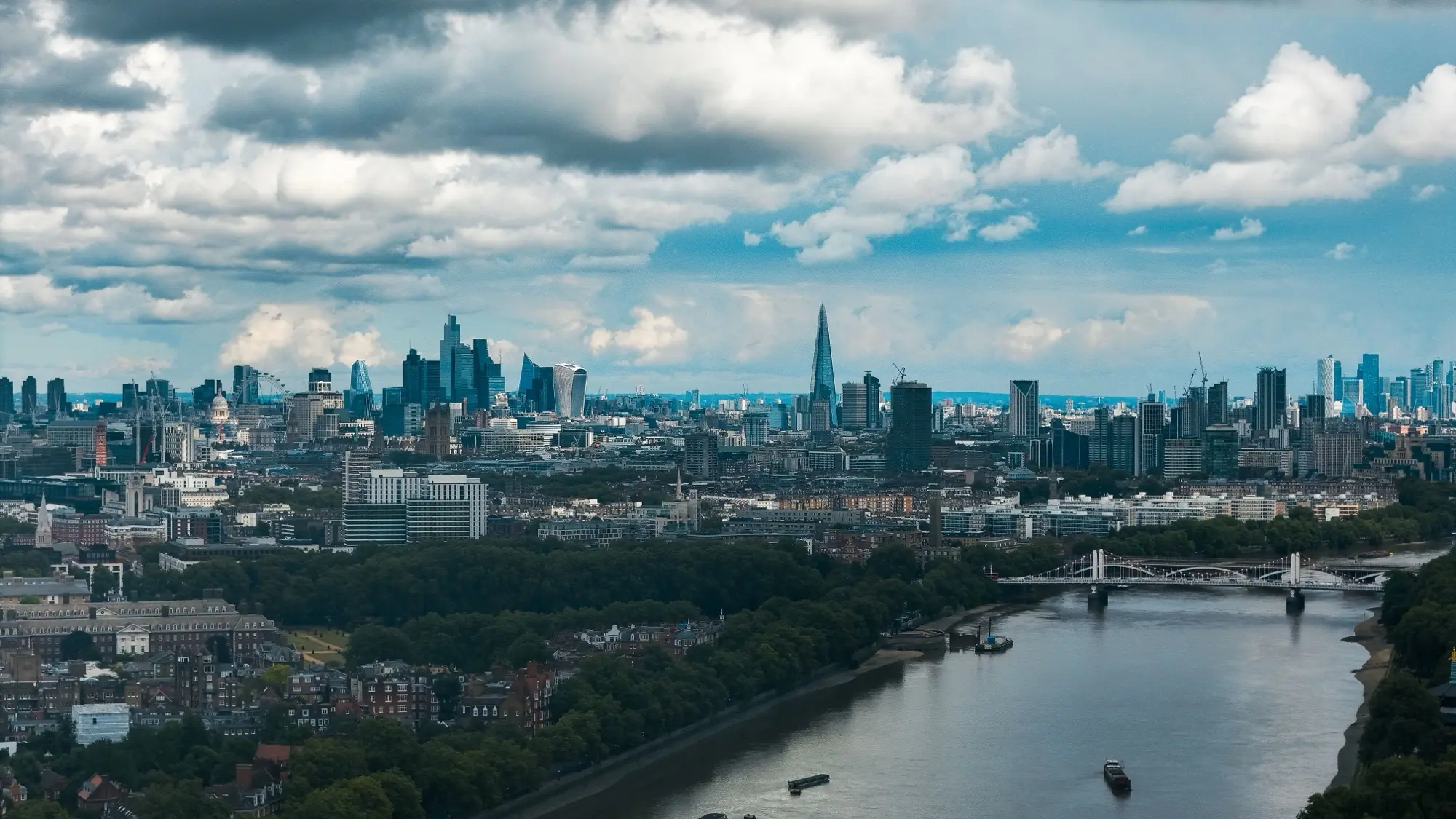
London
No true off-season — but January and late October are as quiet as London gets.
When to visit London
London is calmest in February and busiest in July. For the best balance of decent weather and smaller crowds, aim for January.
London is too big and too well-connected to have a real dead season. It is a business capital, a theatre capital and a museum capital at once, so even the quietest weeks still have a full city underneath them. What changes is where the pressure lands: in summer it is the Tower, Westminster Abbey and the South Bank; in winter it is the West End, the Christmas markets and the department stores.
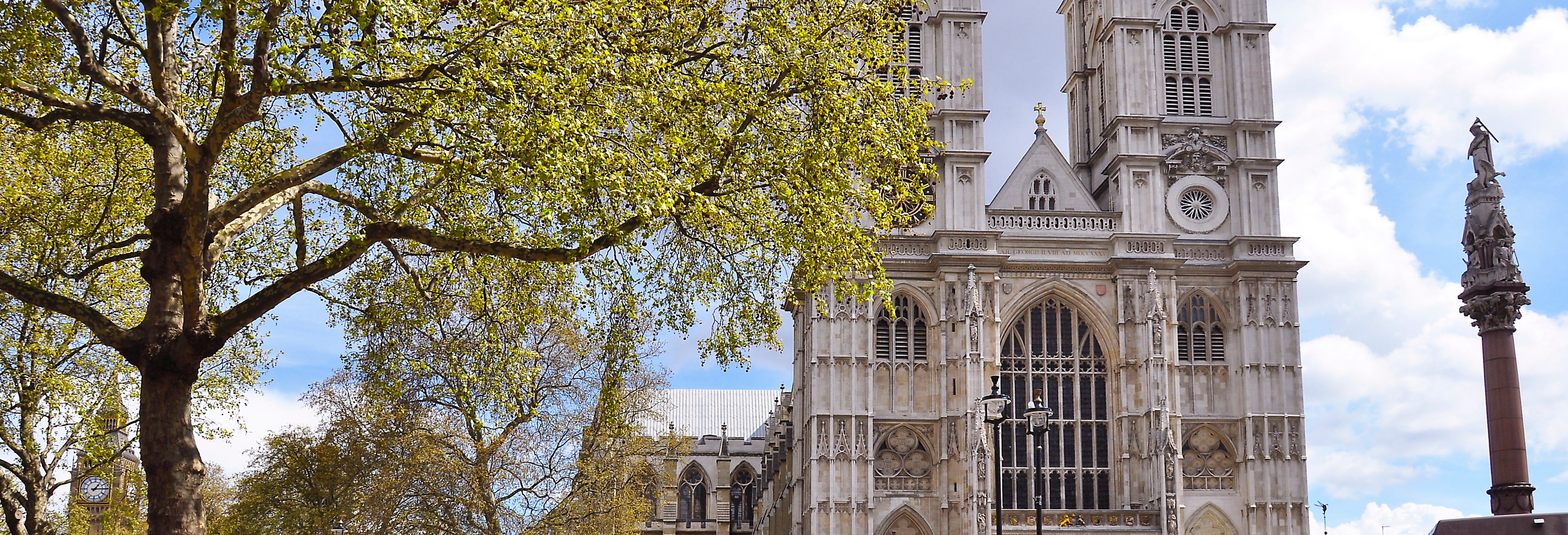
The peak runs from late June to the end of August. English school holidays start in mid-July, overseas arrivals hit their maximum, and the combination makes central attractions run at capacity all day. Notting Hill Carnival on the August bank holiday weekend is the largest single event of the year. May and September are the smarter months: similar daylight, better odds on the weather than most people expect, and noticeably shorter queues.
January is the cheapest and calmest month, and February is close behind apart from one busy half-term week. Late October is the other quiet window, between half-term and the Christmas switch-on. The one date to plan around properly is 25 December, when the Underground stops entirely, almost every attraction closes, and the city goes quiet in a way it never does otherwise.
Book things to do
Tours and tickets in London, from our booking partner.

Crowds month by month
Twelve months of London at a glance — tap a month for the full picture.
Every month in London
Weather, crowds and what’s on — one page per month.
Weather through the year
Typical highs, lows and wet days.
Best day of the week
How the crowd moves through a typical week.
Tue is normally the calmest day of the week.
Best time of day
The daily rhythm, hour by hour.
The 9:00 AM window is usually the calmest of the day.
Where the crowd gathers
A typical peak afternoon in the centre.
How long to stay
Four days barely covers the headline museums and two neighbourhoods; a week is more honest if you want theatre and a day trip.
Local timing tips
- The great national museums are free, so treat them as drop-ins: go at opening or in the final ninety minutes and skip the middle of the day.
- Book Westminster Abbey and the Tower of London online for a lower price and a separate, much shorter entry line.
- Tap in with the same contactless card all week and the fares cap automatically — a separate Oyster card buys you nothing now.
- Nearly everything shuts on 25 December, including the whole Underground network; plan that day around a long walk or a booked meal.
Attractions in London
Frequently asked questions
When is the best time to visit London?
The best time to visit London is February, the quietest month of the year, or the shoulder weeks around January when the crowd eases but the weather still holds.
What is the cheapest and quietest month in London?
February is the quietest month in London, with a modelled crowd level near 48/100 and typical highs of 9°C.
When is London most crowded?
London peaks in July, when both visitor numbers and prices are at their highest.
How many days do you need in London?
Four days barely covers the headline museums and two neighbourhoods; a week is more honest if you want theatre and a day trip.
Other attractions



Photo: Chengxin Zhao · Pexels