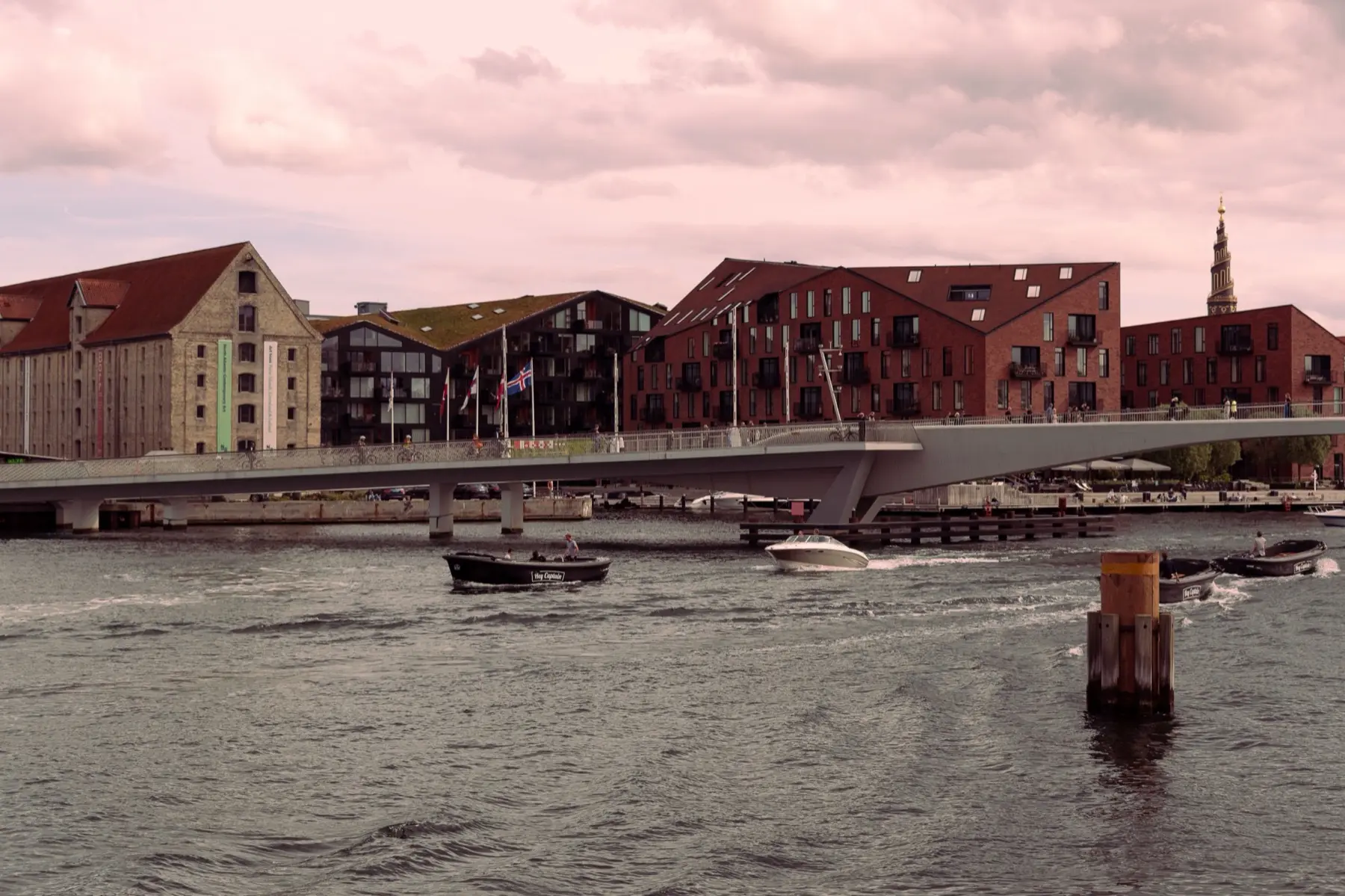
Copenhagen
A short, brilliant summer and a long, cheap dark — November is the real bargain.
When to visit Copenhagen
Copenhagen is calmest in January and busiest in July. For the best balance of decent weather and smaller crowds, aim for February.
Copenhagen sits at 55.7°N, and the light does more to shape its year than the temperature does. In late June there are seventeen and a half hours of daylight and a dusk that never quite finishes; in December there are barely seven, with sunset before half past three. The visitor season tracks that curve almost exactly — a steep climb through May, a hard peak in July, and a long quiet stretch from October to March broken only by Christmas.
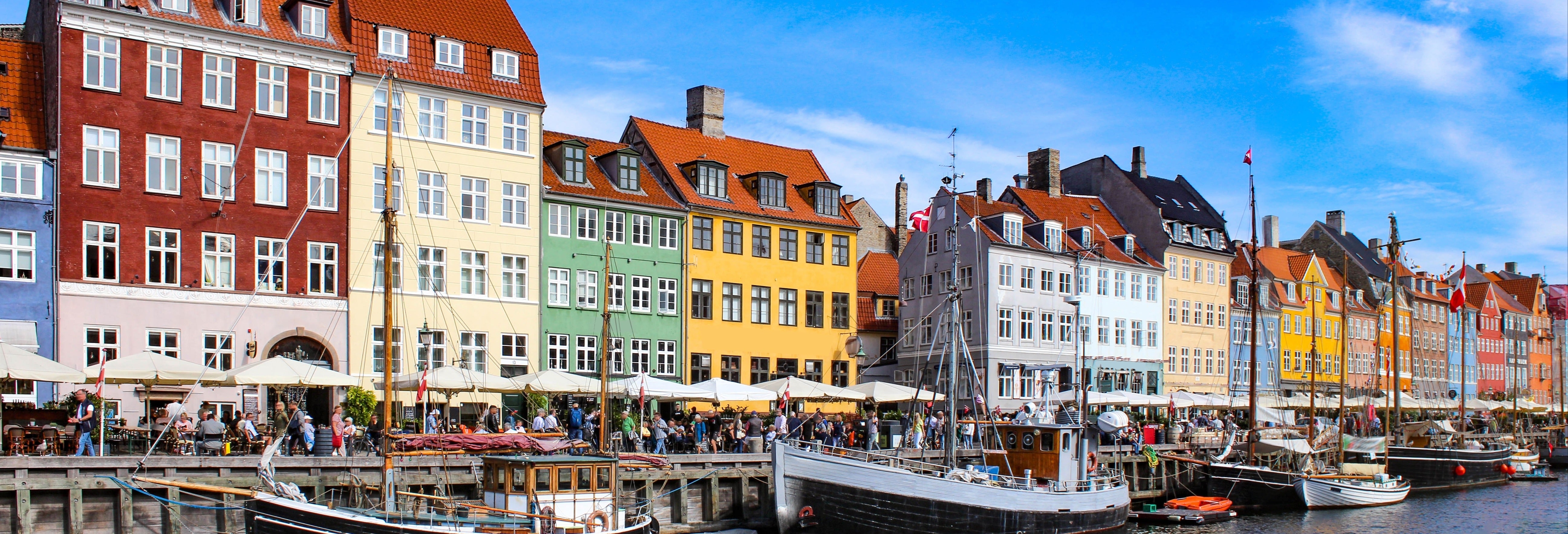
Two things concentrate the summer crowd. Tivoli, which reopens for its summer season in April and is the single busiest attraction in the country, and the cruise terminal at Oceankaj, which handles several hundred calls a year clustered into May–September and puts coach groups into Nyhavn and around the Little Mermaid in defined mid-morning waves. Both are avoidable with timing: Tivoli is at its best after eight in the evening, and Nyhavn is a completely different place at seven in the morning.
The best month is a straight trade. July has the weather and the atmosphere, with harbour swimming at Islands Brygge and everyone outdoors, but it is also the most expensive city in Scandinavia at its most expensive moment. September keeps most of the light and loses a third of the crowd. And November, before the Tivoli Christmas season opens in mid-month, is the outright bargain: dark and cold, but with the Ny Carlsberg Glyptotek, the Design Museum and the National Gallery all quiet enough to sit down in.
Book things to do
Tours and tickets in Copenhagen, from our booking partner.

Crowds month by month
Twelve months of Copenhagen at a glance — tap a month for the full picture.
Every month in Copenhagen
Weather, crowds and what’s on — one page per month.
Weather through the year
Typical highs, lows and wet days.
Best day of the week
How the crowd moves through a typical week.
Tue is normally the calmest day of the week.
Best time of day
The daily rhythm, hour by hour.
The 9:00 AM window is usually the calmest of the day.
Where the crowd gathers
A typical peak afternoon in the centre.
Cruise days change everything
Copenhagen is a cruise port. On ship days the centre fills between mid-morning and late afternoon, then empties again.
How long to stay
Three days covers the harbour, Tivoli, the palaces and one design museum without hurrying; a fourth for Louisiana or a day in Malmö.
Local timing tips
- Tivoli is calmest and best after eight in the evening, and a season pass pays for itself on the second visit — worth it if you are staying nearby.
- The harbour buses on lines 991 and 992 are ordinary public transport and take a standard ticket, giving the same waterfront tour as the paid canal boats.
- Rent a bike rather than using taxis: the city has segregated lanes on nearly every street and the whole centre is fifteen minutes end to end.
- The Louisiana museum in Humlebæk is 35 minutes by train and stays open until 22:00 on weekdays — an evening there is far quieter than an afternoon.
Frequently asked questions
When is the best time to visit Copenhagen?
The best time to visit Copenhagen is January, the quietest month of the year, or the shoulder weeks around February when the crowd eases but the weather still holds.
What is the cheapest and quietest month in Copenhagen?
January is the quietest month in Copenhagen, with a modelled crowd level near 32/100 and typical highs of 3°C.
When is Copenhagen most crowded?
Copenhagen peaks in July, when both visitor numbers and prices are at their highest.
How many days do you need in Copenhagen?
Three days covers the harbour, Tivoli, the palaces and one design museum without hurrying; a fourth for Louisiana or a day in Malmö.
Other attractions


Photo: Ezequiel Filiberto · Pexels