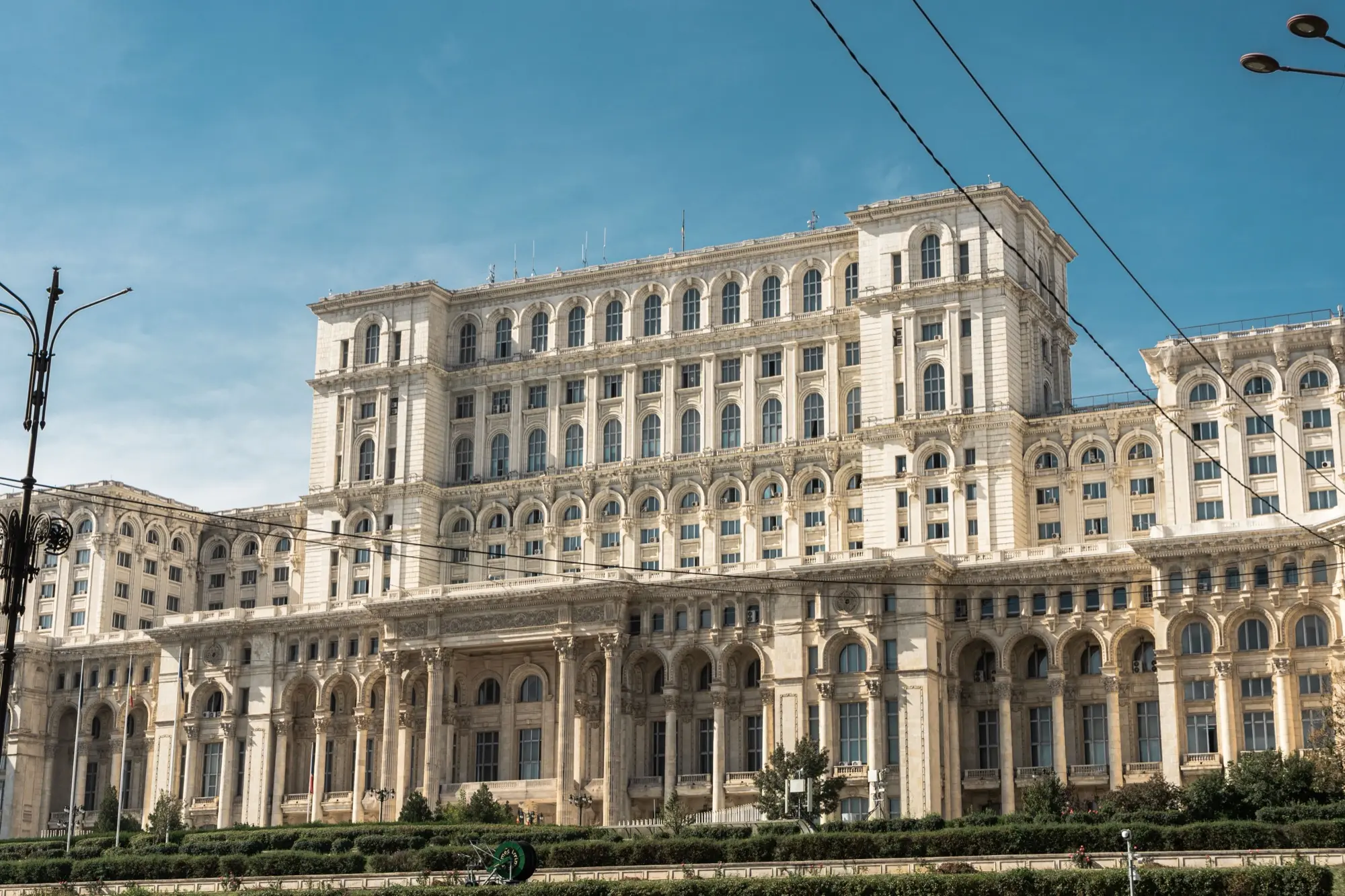
Bucharest
January is cold and calm; the busy months are September and October, when the weather is at its best.
When to visit Bucharest
Bucharest is calmest in January and busiest in October. For the best balance of decent weather and smaller crowds, aim for February.
Bucharest does not have a tourist season in the way Prague or Kraków does. The crowd index moves between 43 in January and 71 in October, and there is no month in which the Old Town, Calea Victoriei and the museums are swamped. What changes much more is the weather, which is the real reason to choose a month: January and February are cold, with night-time lows of -5 °C and -3 °C, while July and August reach 31 °C by day.
The busiest months are September and October, when daytime highs of 25 °C and 18 °C make walking comfortable. In odd-numbered years the George Enescu International Festival runs from late August to late September, the Bucharest Days weekend falls around 20 September, and the Bucharest Marathon takes place in October. July is a little calmer than May and June: the index eases to 61 while highs reach 31 °C.
For a quiet visit, January, February and April are the best choices. April has an index of 57, thirteen hours of daylight and highs of 19 °C. November (66) and December (61) sit in the middle, with the Christmas market opening at the end of November. Winter is a fair trade if you pack properly: the museums are easy and the cafés are open.
Book things to do
Tours and tickets in Bucharest, from our booking partner.
 Free cancellation
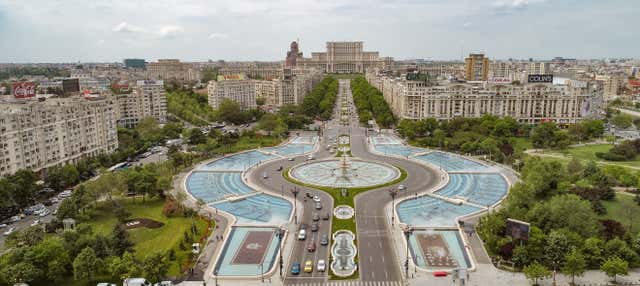
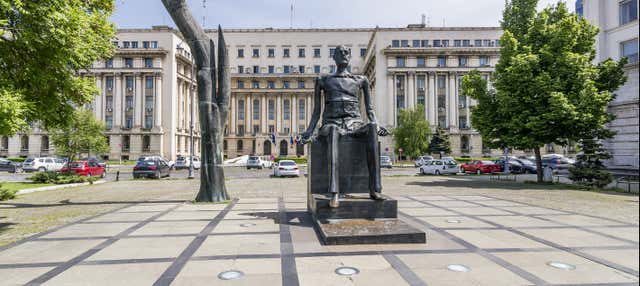
 Free cancellation
 Free cancellation
 Free cancellation
Crowds month by month
Twelve months of Bucharest at a glance — tap a month for the full picture.
Every month in Bucharest
Weather, crowds and what’s on — one page per month.
Quietest month: Bucharest in January
Weather through the year
Typical highs, lows and wet days.
Best day of the week
How the crowd moves through a typical week.
Tue is normally the calmest day of the week.
Best time of day
The daily rhythm, hour by hour.
The 9:00 AM window is usually the calmest of the day.
Where the crowd gathers
A typical peak afternoon in the centre.
How long to stay
Two to three days: one for the Old Town and Calea Victoriei, one for the Palace of the Parliament area and the museums, and a third for the parks or a day trip towards the Carpathians.
Local timing tips
- The Museum of the Romanian Peasant is open Wednesday to Sunday, 10:00 to 18:00 (last entry 17:00), and closed on Mondays and Tuesdays, so plan those two days around other sights.
- The Grigore Antipa Natural History Museum is closed on Mondays; in its 1 April to 31 October schedule it opens Tuesday to Sunday until 20:00, so check the winter hours on its site before a cold-season visit.
- The Night of the Museums is held on a Saturday evening in May (23 May in 2026): many Bucharest museums open late, most of them free, some charging, so read the programme on the official site before you choose.
- In odd-numbered years the George Enescu International Festival runs from late August to late September (27 August to 26 September in 2027); if you want a concert, check the programme and booking dates with the organiser early.
Where to stay
Outside peak season, nightly rates tend to be lower, and flexible dates help. Compare places to stay on Booking.com.
Frequently asked questions
When is the best time to visit Bucharest?
The best time to visit Bucharest is January, the quietest month of the year, or the shoulder weeks around February when the crowd eases but the weather still holds.
What is the cheapest and quietest month in Bucharest?
January is the quietest month in Bucharest, with a modelled crowd level near 43/100 and typical highs of 3°C.
When is Bucharest most crowded?
Bucharest peaks in October, when both visitor numbers and prices are at their highest.
How many days do you need in Bucharest?
Two to three days: one for the Old Town and Calea Victoriei, one for the Palace of the Parliament area and the museums, and a third for the parks or a day trip towards the Carpathians.
Sources
Weather: 1995–2024 averages from the Bucharest-Băneasa weather station (NOAA GHCN-Daily); rain days count days with at least 1 mm.
Monthly crowd index: calculated from recorded overnight stays (table tour_occ_nin2m, 2022–2025; area: Bucharest-Ilfov region (RO32)), published byEurostat.
Crowd scores are modelled estimates, not live counts.How the model works
Events, holidays and practical notes are checked against these official pages:
Other attractions


Photo: Uiliam Nörnberg · Pexels