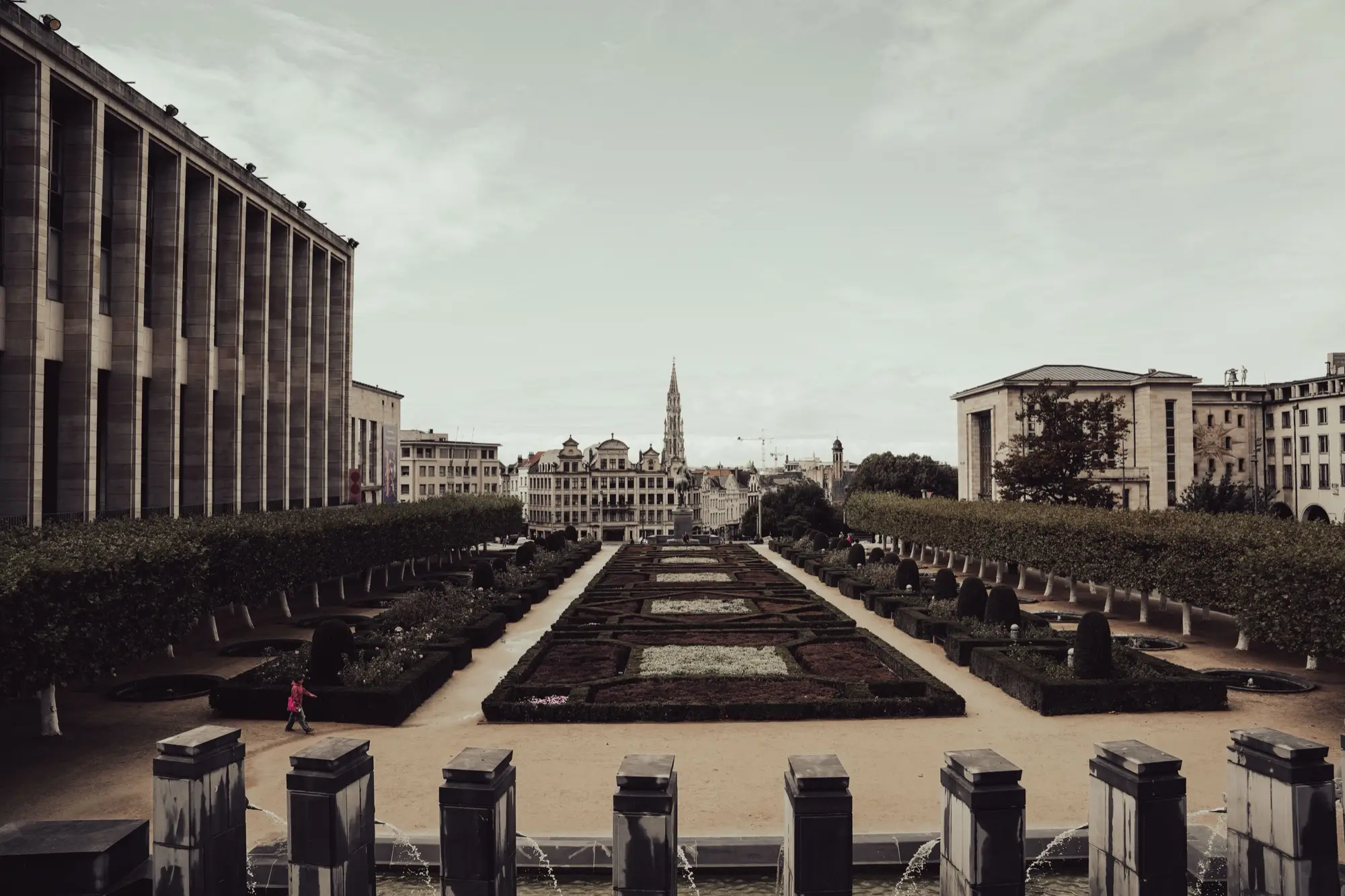
Brussels
A weekday business city with weekend visitors — and a December that fills the square.
When to visit Brussels
Brussels is calmest in January and busiest in July. For the best balance of decent weather and smaller crowds, aim for February.
Brussels carries two distinct populations. During the week it is the administrative capital of the European Union, and its hotels are full of people in meetings — which is why rates are often higher on a Tuesday than a Saturday, the reverse of almost every other European city. At weekends the visitor crowd takes over, and it concentrates almost entirely on the Grand-Place, the Manneken Pis, the Sablon and the comic-strip route in between.
The seasonal curve is modest. July and August are the busiest months, with warm but unreliable weather and around ten rain days regardless of season, and the city noticeably calmer on weekdays as the institutions wind down. In even-numbered years the Flower Carpet covers the Grand-Place for four days in mid-August and draws a very large crowd for a very short window. December is the other lift: the Winter Wonders market runs from late November across the Grand-Place, the Bourse and Sainte-Catherine, and it is one of the better-organised markets in the region.
The quiet months are January, February and November, and they are cheap by capital-city standards, with the Magritte Museum, the Musical Instruments Museum and the Royal Museums of Fine Arts all comfortable at any hour. May and September are the best-weather windows and the best value for a weekend: institutional demand is high mid-week, so arriving Friday and leaving Monday tends to cost meaningfully less than the reverse.
Book things to do
Tours and tickets in Brussels, from our booking partner.
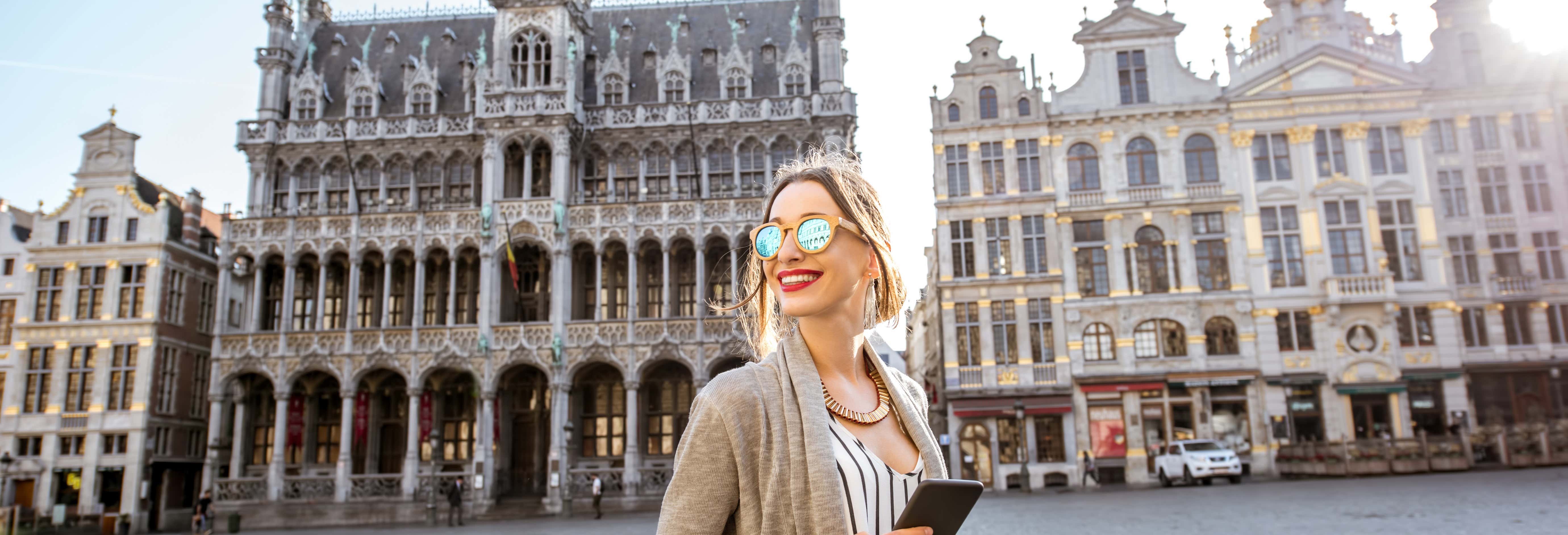
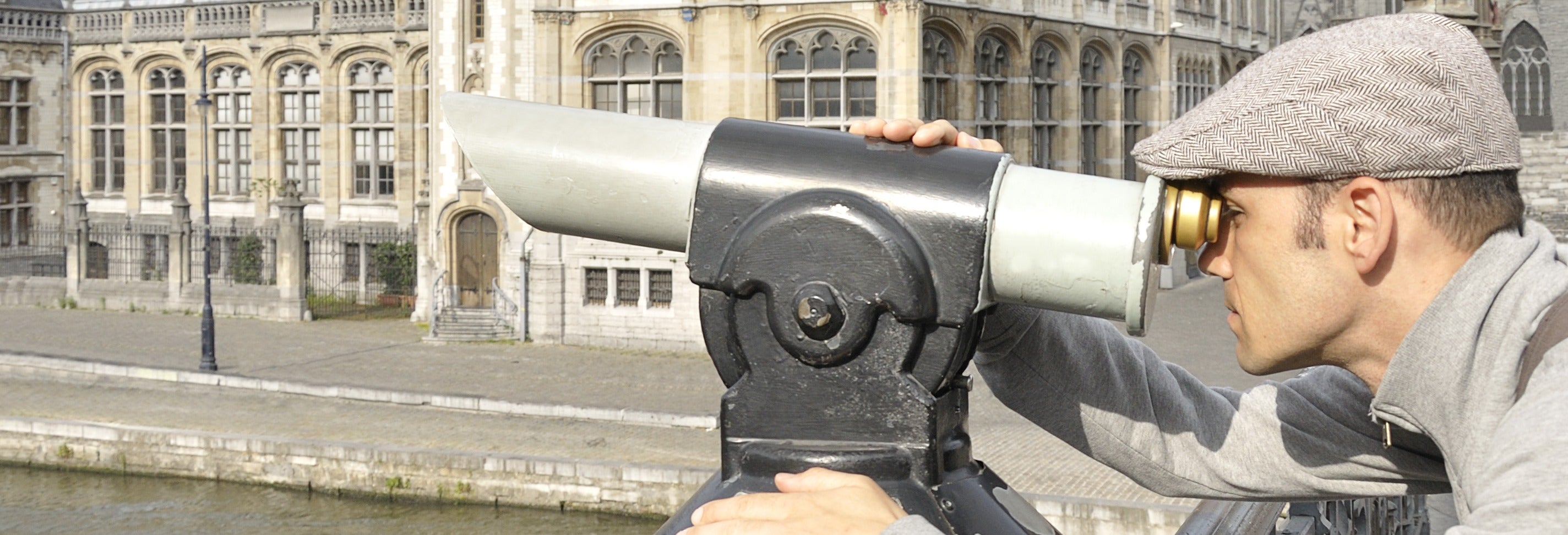

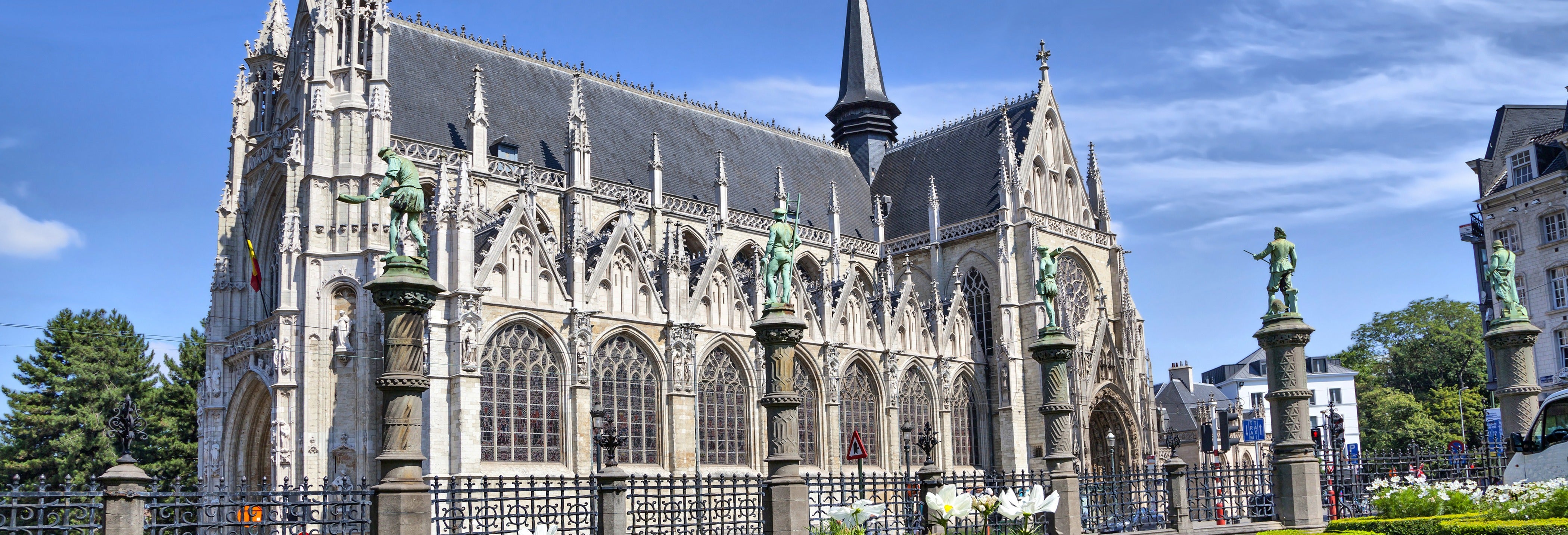

Crowds month by month
Twelve months of Brussels at a glance — tap a month for the full picture.
Every month in Brussels
Weather, crowds and what’s on — one page per month.
Weather through the year
Typical highs, lows and wet days.
Best day of the week
How the crowd moves through a typical week.
Tue is normally the calmest day of the week.
Best time of day
The daily rhythm, hour by hour.
The 9:00 AM window is usually the calmest of the day.
Where the crowd gathers
A typical peak afternoon in the centre.
How long to stay
Two days is plenty for the centre, the museums and a beer evening; a third if you want Bruges, Ghent or Antwerp, all under an hour by train.
Local timing tips
- Hotel prices are driven by the EU institutions, so weekend nights are usually cheaper than mid-week — the opposite of most capitals.
- The Grand-Place is best at seven in the morning or after eleven at night, when the guilds are lit and the square is genuinely empty.
- Most museums close on Monday, but the Atomium, the parks and the comic-strip mural walk do not, which makes them the obvious Monday plan.
- Ghent, Bruges and Antwerp are all 35–60 minutes by train from Bruxelles-Midi, so a day trip needs no planning beyond turning up at the station.
Frequently asked questions
When is the best time to visit Brussels?
The best time to visit Brussels is January, the quietest month of the year, or the shoulder weeks around February when the crowd eases but the weather still holds.
What is the cheapest and quietest month in Brussels?
January is the quietest month in Brussels, with a modelled crowd level near 40/100 and typical highs of 6°C.
When is Brussels most crowded?
Brussels peaks in July, when both visitor numbers and prices are at their highest.
How many days do you need in Brussels?
Two days is plenty for the centre, the museums and a beer evening; a third if you want Bruges, Ghent or Antwerp, all under an hour by train.
Other attractions

Photo: Tapas S · Pexels