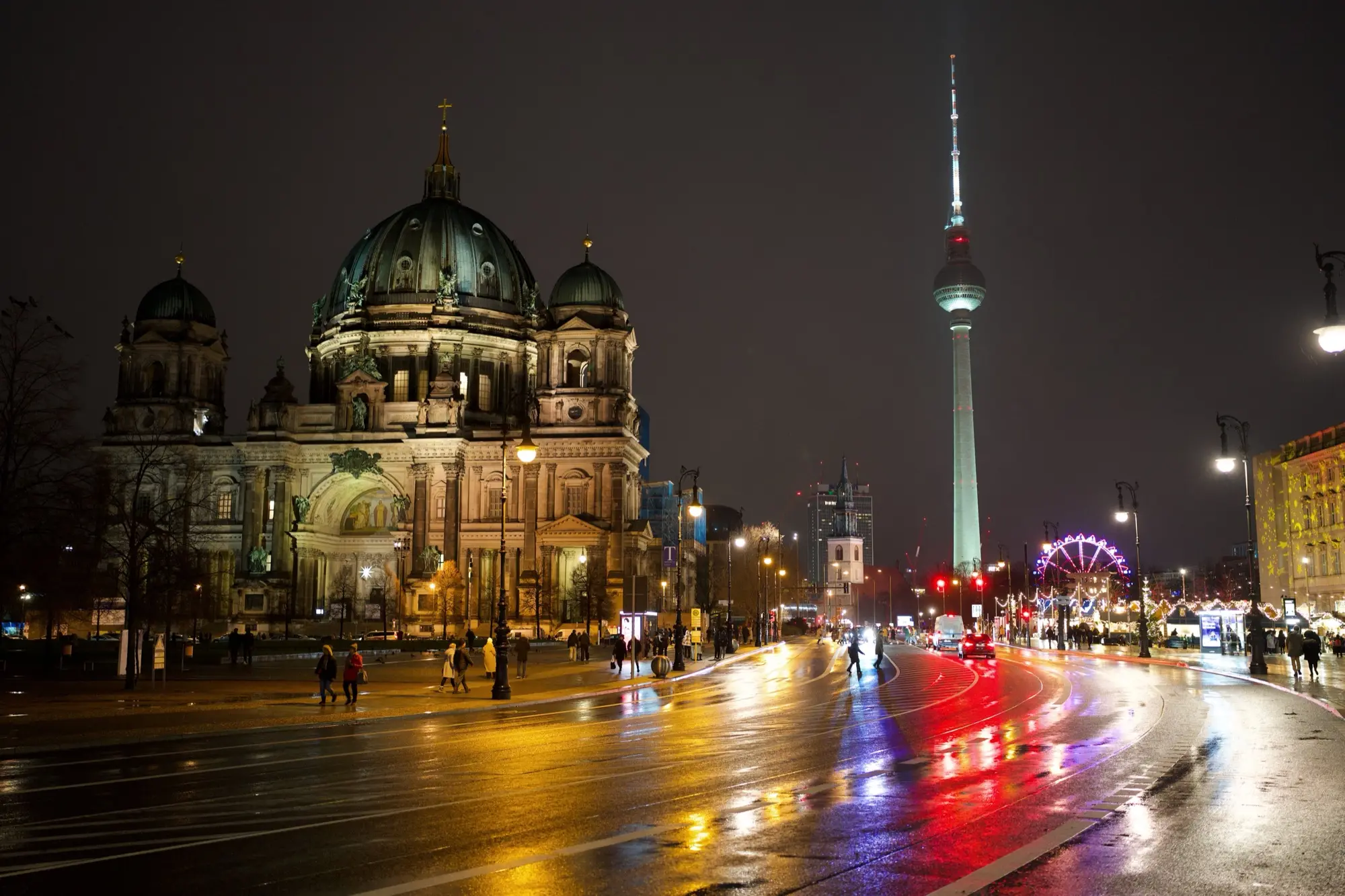
Berlin
Too spread out to ever feel full — but November buys the museums and half the rate.
When to visit Berlin
Berlin is calmest in January and busiest in July. For the best balance of decent weather and smaller crowds, aim for February.
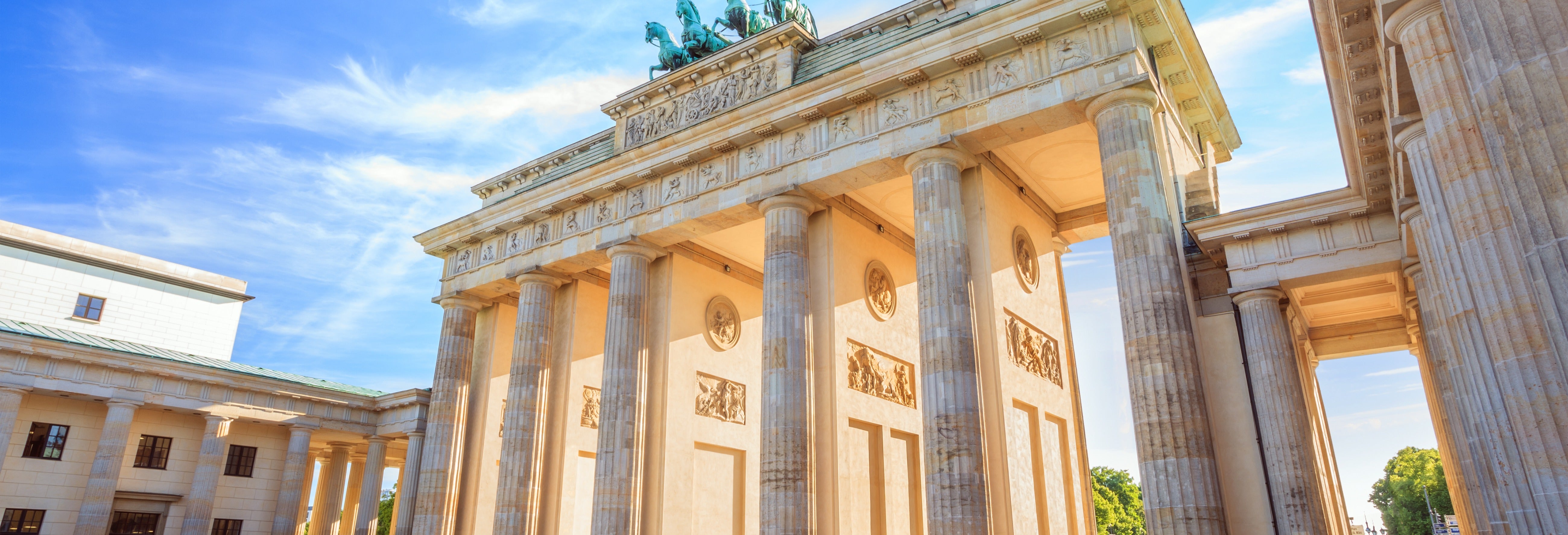
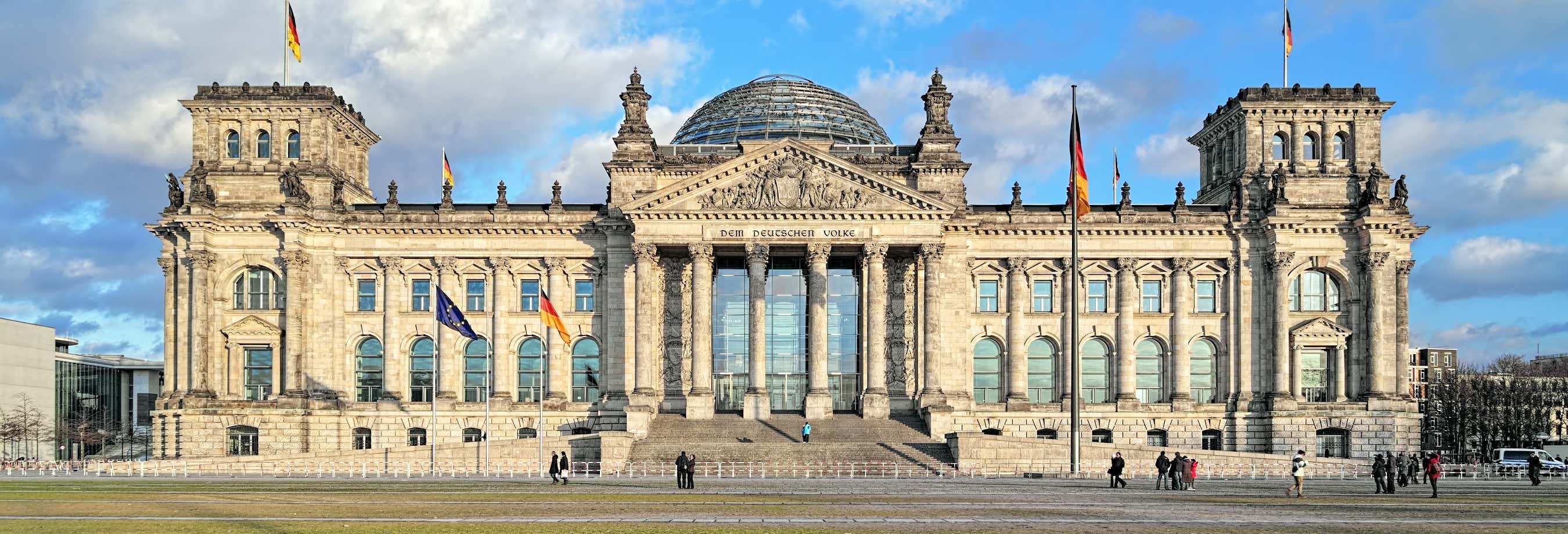
Berlin is nine times the area of Paris with a fraction of the density, and it simply does not queue the way other European capitals do. Even in August the pressure is localised — Museum Island, the Brandenburg Gate, the East Side Gallery and the Reichstag dome — while Kreuzberg, Neukölln and Prenzlauer Berg carry on as normal residential districts. That makes month-choosing here less about avoiding crowds and more about weather and what is actually on.
What drives the calendar is events rather than season. Berlinale in February and ITB in March both fill hotels in months that would otherwise be dead; the Marathon in late September and the Festival of Lights in early October do the same in autumn. The summer peak, July and August, is long and mild rather than sharp: highs around 24–25°C, the lakes at Wannsee and Müggelsee busy, and open-air cinemas and beer gardens running every night.
For value, November is the clear winner — grey, short-dayed and cheap, with the Pergamon collections and the Gemäldegalerie almost private on a weekday. For weather, late May to June is the strongest window, with seventeen hours of daylight and the city outdoors from morning until eleven at night. December is busy at weekends thanks to a scattering of Christmas markets and an enormous New Year gathering at the Brandenburg Gate, but weekdays stay entirely manageable.
Book things to do
Tours and tickets in Berlin, from our booking partner.


Crowds month by month
Twelve months of Berlin at a glance — tap a month for the full picture.
Every month in Berlin
Weather, crowds and what’s on — one page per month.
Weather through the year
Typical highs, lows and wet days.
Best day of the week
How the crowd moves through a typical week.
Tue is normally the calmest day of the week.
Best time of day
The daily rhythm, hour by hour.
The 9:00 AM window is usually the calmest of the day.
Where the crowd gathers
A typical peak afternoon in the centre.
How long to stay
Three days covers the Wall sites, Museum Island and one outer district properly; four or five if you want Potsdam and a real night out.
Local timing tips
- The Reichstag dome is free but needs online registration with passport details, usually a week or two ahead — there is no reliable walk-up.
- A Museum Island day ticket covers all five collections, and the Pergamon is in long-term partial closure, so check what is actually open before you buy.
- Most state museums close on Monday; the Wall memorial on Bernauer Straße and the outdoor Topography of Terror do not, which makes them the obvious Monday plan.
- Buy an AB-zone day ticket and validate it once — Berlin runs on trust with roving inspectors, and the fine is issued on the spot.
Frequently asked questions
When is the best time to visit Berlin?
The best time to visit Berlin is January, the quietest month of the year, or the shoulder weeks around February when the crowd eases but the weather still holds.
What is the cheapest and quietest month in Berlin?
January is the quietest month in Berlin, with a modelled crowd level near 42/100 and typical highs of 3°C.
When is Berlin most crowded?
Berlin peaks in July, when both visitor numbers and prices are at their highest.
How many days do you need in Berlin?
Three days covers the Wall sites, Museum Island and one outer district properly; four or five if you want Potsdam and a real night out.
Other attractions
Photo: Abdulmomen Bsruki · Pexels